Do you remember the stone adze? We don’t either. That’s the point. The move from flint to the cordless drill was more than just a better grip. It was a big change in what a tool is.
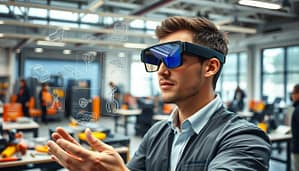
We’re on the edge of another big change. The future of tools isn’t just about new batteries or brighter lights. It’s about tools that think, not just do.
We’re moving from the Iron Age to the Cognitive Tool Age. It’s not just about electricity, like battery power. It’s about using data as the new raw material.
The real change isn’t the drill or the saw. It’s the data they collect and the cloud-based algorithms that learn from it.
Forget old tool industry trends. The 2035 jobsite will be a network of smart devices, not just power tools. We’re talking about drills that know the material’s density and saws that learn from sawdust.
This forecast isn’t a guess. It’s a blueprint for the next decade of work.
Why early adopters should care now
Being an early adopter is more than just showing off the latest gadget. It’s about shaping the future. The tools you buy today are not just for work; they’re also data collectors. They learn, report, and improve as they go.
This isn’t about keeping up with the latest trends. It’s about preparing for what’s next. The data from your tools today helps create smarter systems for tomorrow. It’s like investing in a system that gets better with time.
The heart of cordless dominance is not just about convenience. It’s about the data tools collect. Every action, like changing batteries or adjusting settings, adds to the data pool. This data helps tools get smarter, creating a cycle of improvement.
Missing out on this shift means falling behind. It’s not just about being a little late with technology. It’s about understanding your work in a way others can’t. The cordless dominance of tomorrow is about being smart, not just strong.
This isn’t just about buying a new drill. It’s about setting the stage for the future. It’s a smart move that prepares you for the jobsite of tomorrow. The tools are just the start.
Macro drivers: electrification, labor gaps, safety, datafication
Forget about small upgrades to tools. The real change comes from four big forces. The future of tools is about being connected, smart, and part of a big data system. Old ways of measuring power are being replaced by new ones focused on efficiency, safety, and smarts.
The first big change is electrification of tools. It’s not just about switching to batteries. It’s a big shift, like what’s happening in cars. Tools are becoming clean, quiet, and connected, making jobsites better and safer.
This change isn’t just about being green. It’s about being smart and efficient. It lets tools work in more places than before.
The second big change is the need for more skilled workers. Tools are helping fill this gap. Imagine tools that help beginners do their jobs better. A smart drill that shows the right torque, a level that shows straight lines, or a saw that stops if it kicks back.
These tools make everyone better at their job. They’re not replacing workers but making them better with digital help.
The third big change is safety. Old safety rules are being updated with new tech. Safety is now about smart systems, not just hard hats and boots. Tools can now stop themselves if they sense danger.
Think of a saw that stops if it sees a hand too close. Or a helmet that warns of dangers before you even look up. Safety is becoming more proactive and smart.
The last big change is datafication. Tools are now connected and share data. Your tools will have MAC addresses and share info. They track their own status and help improve workflows.
This change is not just about tracking tools. It’s about making jobsites smarter and safer. Tools are now data centers, not just simple tools.
These four big changes are not just updating tools. They’re changing what tools are and do. The future of tools is about being connected, smart, and efficient. It’s not just about better tools, but a whole new way of working.
Materials & motors: lighter alloys, composites, next-gen brushless
Power tools are changing in big ways. It’s not just about adding more power. We’re looking at new materials that are lighter and smarter. The future of tools is about less weight and more intelligence.
The job site is becoming a place of elegance, not just hard work. This is thanks to materials like carbon fiber and advanced motors. These tools are now silent and work with precision.
Lighter Alloys, Composites: The Featherweight Champions
Drills used to feel heavy after a long day. But that’s changing. We’re using materials that are both light and strong.
These materials are not just about being lighter. They’re made for specific tools. For example, impact drivers now have composites that reduce vibration. This makes the tool feel more controlled.
Recip saws also benefit from these materials. They keep the motor cool, so you can work for hours without a break. This isn’t just a lighter tool; it’s one that helps you work longer.
The next generation of brushless motors is truly special. They’re not just efficient; they’re smart. These motors use sensors to adjust power quickly, anticipating problems before they happen.
These motors are like the all-wheel-drive system in a supercar. They distribute power and prevent slipping. They work with the battery and other parts to make the tool feel like an extension of you.
The combination of light materials and smart motors makes tools truly ergonomic. It’s like the difference between driving a truck and a race car. The new tools are designed to work with you, not against you.
Battery roadmap: solid-state, sodium-ion, cooling architectures
The gas can is dead. The era of the gas can is over, replaced by the alchemy of the periodic table. The power tool in your hand will soon draw its juice not from unleaded, but from the quantum wizardry of solid-state batteries. This isn’t just an upgrade; it’s a revolution in a battery pack. Forget the potato battery jokes—today’s lithium-ion is the potato, and solid-state is the five-course meal.
So, what makes solid-state batteries the holy grail? Imagine a battery that can’t catch fire if you accidentally drop it off a ladder. That’s the safety promise of solid-state tech. By replacing the flammable liquid electrolyte in today’s lithium-ion cells with a solid, ceramic-like material, we eliminate the primary fire risk that haunts current power tool batteries. The result? A pack that can take a beating and charge in a fraction of the time. Your 18V drill will get a full charge in the time it takes to drink a coffee, not a full lunch break.
The magic isn’t just in safety. Solid-state cells promise energy densities that could double the runtime of your tools. That means a single battery could run a high-torque impact driver or a circular saw through a full day of framing without a single swap. It’s the difference between a gas can and a fuel tanker. The solid-state battery isn’t just an incremental step; it’s the jump from the combustion engine to the electric motor.

But let’s not anoint one king just yet. While solid-state is the flashy heir apparent, a dark horse is quietly gaining ground: sodium-ion. If solid-state is the luxury sedan, sodium-ion is the work truck—rugged, reliable, and, critically, cheap. Sodium is one of the most abundant elements on Earth, making sodium-ion batteries potentially far cheaper to produce than their lithium-based cousins. They’re the dark horse for the workhorse tools: the circular saws, the hammer drills, the grinders. They might not win a beauty contest for energy density, but for cost and longevity in high-use professional settings, they could be the unsung hero, making improved efficiency in energy storage a practical reality on the jobsite.
Of course, more power and faster charging generate heat—the enemy of all electronics. This is where the final piece of the puzzle, the cooling architecture, becomes critical. We’re moving beyond a simple fan. We’re talking about advanced thermal management: liquid-cooled cells, phase-change materials that absorb heat, and smart sensors that can detect a hot cell and divert power before it becomes a problem. Think of it as a high-tech cooling system for a battery, ensuring your tool can run at peak performance all day in the Arizona sun without breaking a sweat.
This trifecta—solid-state safety and power, sodium-ion affordability, and intelligent cooling—isn’t just an upgrade. It’s a complete reimagining of portable power. The gas can is dead. The future is solid, it’s smart, and it doesn’t need a trip to the pump.
Smart features: sensors, firmware, OTA updates, APIs
Your hammer is about to get a PhD. We’re not just adding Bluetooth to drills. We’re creating intelligent tools that think and adapt. This change turns a simple power tool into an Internet of Things (IoT) endpoint.
Forget the gimmicks. The real power of smart tools is in combining hardware and software. Your drill can now diagnose issues and your saw can warn you of overheating.
The Nervous System: Sensors That Feel the Work
It all starts with sensors. We’re moving from simple switches to tools that measure torque, temperature, and more. Imagine an impact driver that knows when a screw is perfectly seated, preventing damage.
This isn’t just about data. It’s about actionable intelligence at the point of use.
Brains Over Brawn: The Firmware Factor
The brain is in the firmware, not the motor. Modern smart tools run on advanced software. This software controls everything from power to safety cut-offs.
A firmware bug can be fixed remotely. This ensures your tools always run the latest, safest software.
Evolution, Not Revolution: The Magic of OTA Updates
Over-the-Air (OTA) updates are a game-changer. Remember when your phone got a software update and the camera worked better? That’s coming to your toolbox.
A manufacturer can update your tool overnight. This could improve battery life or add new safety features. Your tool gets better after you buy it.
The API: Where Your Tools Talk to Your Entire Workflow
This is where integration magic happens. An Application Programming Interface (API) connects your tool to your digital world. Imagine your impact wrench logging data to the cloud, which updates your project status.
Your tool isn’t just a tool anymore. It’s a data node in a connected workflow.
| Smart Feature | What It Does | User Benefit | Example |
|---|---|---|---|
| Embedded Sensors | Measure torque, temperature, vibration, and angle in real-time. | Prevents over-tightening, predicts failures, ensures precision. | Impact driver stops before a screw head strips. |
| Updatable Firmware | The tool’s internal software that controls its “personality.” | Gets new features and safety protocols after purchase. | A saw’s kickback detection algorithm is improved via an OTA update. |
| OTA Updates | Wireless, over-the-air delivery of firmware and features. | Tool performance and safety improve over time without a hardware swap. | A new cutting mode for a specific material is pushed to all compatible saws. |
| Open API | Allows the tool to “talk” to other software and devices. | Integrates tool data into project logs, inventory systems, and safety audits. | Drill usage data feeds directly into a project’s digital logbook. |
This isn’t just about a “smart” drill. It’s about a tool that can diagnose its own issues and order parts. It’s a tool with a software development kit (SDK). The API lets your drill talk to other tools and systems.
The future of the jobsite is about more intelligent tools. These tools won’t just do work; they’ll collect data and talk to the digital world. The hammer may not get a PhD, but it’s definitely going to school.
Jobsite connectivity: BLE/UWB/RTLS tracking that sticks
Imagine a construction site where every tool has a digital heartbeat. Losing a tool or equipment is a thing of the past. This isn’t a future vision; it’s the promise of a fully connected jobsite.
The key to this transformation is the network of standards. This network allows BLE beacons, UWB chips, and RTLS to work together. They create a cohesive, intelligent system.
Think of your average jobsite as a symphony of chaos. Now, imagine a digital twin of that site. This digital twin is a real-time, data-rich model where every asset is a blinking dot on a screen.
The goal is to know where every asset is, in real time. This includes a 40,000-pound excavator and every Makita impact driver.
The Triad of Triangulation: BLE, UWB, and RTLS
These aren’t just acronyms; they’re the building blocks of the smart jobsite. They work together:
- Bluetooth Low Energy (BLE) Beacons: They’re cheap, long-lasting, and perfect for simple alerts. For example, “The pallet of drywall is here.”
- Ultra-Wideband (UWB): It’s the precision artist. It tells you exactly where a tool is, down to a few centimeters. It’s the difference between “somewhere on site” and “on the third shelf of the red gang box.”
- Real-Time Location Systems (RTLS): This is the brain. It takes the raw location data and translates it into actionable intel on a dashboard. It shows the real-time location of every tagged asset.
The Standards War You Haven’t Heard Of
The real battle for the connected jobsite isn’t over the best chip or battery life. It’s the standards. Without a common language, a DeWalt battery won’t talk to a Milwaukee tool chest. A Hilti mesh network will be a walled garden.
We’ve seen this movie before: VHS vs. Betamax, Blu-ray vs. HD DVD. The “winning” technology isn’t always the best one. It’s the one everyone agrees to use.
An open, interoperable standard is the holy grail. It’s the difference between a proprietary, locked-in ecosystem and a jobsite where new sensors can be added easily. The winning standard won’t be the one with the most features. It will be the one that becomes the industry’s common tongue.
Why This Isn’t Just About Finding a Hammer
This connectivity is a seismic shift in job site intelligence. It’s not just about asset tracking. It’s about the data.
- Predictive Maintenance: A concrete saw that reports its own motor temperature and blade wear. It automatically schedules its own service.
- Enhanced Security: Instant alerts if a high-value asset leaves a predefined geofence.
- Labor and Workflow Optimization: Seeing that a crew is waiting on a specific tool. It’s currently across the site, and automatically routing a laborer to retrieve it.
The connected jobsite of 2035 won’t just have smart tools. It will be a smart environment. The standards that allow a Hilti tool to report its location to a Procore dashboard via a Cisco network are what will make this vision a reality. The future isn’t just connected; it’s speaking the same language.
Safety-first design: kickback control, auto-shutoff, proximity sensing
Forget the old days of hard hats and steel-toed boots. Today, jobsite safety is about tools that think for themselves. We’re moving from passive to active safety, where tools predict and prevent accidents before they happen. This isn’t about coddling users; it’s about creating a guardian angel in every drill press, circular saw, and nail gun.
This change is a big shift. We’re not just adding guards or warning labels anymore. We’re embedding intelligence that predicts and prevents accidents. It’s like moving from a seatbelt to an autonomous emergency braking system. The goal is a tool that’s a partner, not just a dumb instrument.
Let’s look at the three main parts of this new safety-tech. They’re not just fancy features; they’re the new standard.
1. Kickback Control: The Physics-Defying Copilot
Kickback is a big problem, leading to serious injuries. Modern safety tech uses gyroscopes and torque sensors to detect kickback. It can react fast, reversing the blade or engaging a dynamic brake. It’s like traction control for your circular saw, keeping everything safe.
2. Auto-Shutoff: The Guardian Angel Circuit
This tool knows when to stop. Inertial sensors detect sudden, abnormal motion, like a saw being dropped. In a split second, the tool cuts power before you can react. For cordless tools, this can save your life. It’s not just a kill switch; it’s a predictive stop.
3. Proximity Sensing: The Invisible Safety Net
This is where things get really cool. Tools use sensors to create an invisible “hazard zone.” Imagine a table saw that slows down before your hand touches the blade. Or a nail gun that will not fire unless pressed against a surface. It’s like a force field for your fingers.
The table below shows how these systems work together for safety:
| Safety Feature | Technology | Primary Benefit | Impact on Workflow |
|---|---|---|---|
| Kickback Control | Gyroscopes, Torque Sensors, Inertial Measurement Units (IMUs) | Prevents the tool from bucking or twisting violently. | Reduces user fatigue and prevents loss of control. |
| Auto-Shutoff | Inertial sensors, current-draw monitoring | Instantly cuts power during a dangerous event. | Prevents tool “runaway” and secondary accidents. |
| Proximity Sensing | Capacitive, Radar, or LiDAR sensors | Creates a safe zone, stopping or slowing the tool before contact. | Prevents lacerations, amputations, and kickback injuries. |
The integration of these safety tech features is key. It’s not just about one safer tool. It’s about creating a system of safety. A saw with kickback control is good. But a saw that also senses bystanders and slows its blade is revolutionary. This integrated safety tech approach is the future.
This isn’t about wrapping the jobsite in bubble wrap. It’s about using machine precision to enhance human skill. The goal is a future where tools are intelligent and watchful, acting as a co-pilot. The smartest safety tech isn’t a barrier; it’s a better way to work.
Platform ecosystems: packs, chargers, accessories, software lock-in
Forget the old ways of buying tools. Today, it’s all about the ecosystem. You’re not just buying a drill; you’re getting access to a whole world of products. Welcome to a world where you can’t leave the brand’s garden.
This era is all about platforms and payloads. The tool is just the start. It opens up a world of batteries, chargers, and data. The real battle is for your loyalty, not just your garage space.

The New Currency: Proprietary Power Packs
The battery is more than just a battery. It’s a loyalty card. Once you choose a brand, you’re locked in. The batteries only fit their tools, making it hard to switch.
This new model focuses on platforms and payloads. The tool is the platform, and the batteries and services are the high-margin payload. This keeps you coming back for more.
The Charger as a Choke Point
Even chargers have become strategic assets. Fast chargers and smart chargers collect data and keep you in the ecosystem. They’re not just convenient; they’re essential for the brand’s success.
These chargers can talk to batteries and report back to the brand. This data helps manufacturers understand how their tools are used. It’s a powerful tool for improving products and services.
Software: The Ultimate Lock-In
The digital world is the most powerful part of the ecosystem. Tool settings and performance data are stored in the cloud. You can adjust your drill from your phone.
This integration makes it hard to switch brands. Once you’re in, it’s expensive to leave. You’re not just buying a saw; you’re investing in a system for your work.
The goal is a seamless ecosystem where every addition makes the system more valuable. It’s not about the best tool; it’s about the most inescapable garden.
| Ecosystem Component | Brand A’s “Lock-In” Strategy | Brand B’s “Open Garden” Play |
|---|---|---|
| Battery Platform | Proprietary slide-on battery, only fits Brand A tools. | Promises “open” battery format, partners with 3rd parties. |
| Data & Software | Proprietary app, tool data locked to brand cloud. | Open API for third-party app development. |
| Accessory Ecosystem | Certified accessory program (lights, speakers, radios). | Standardized mounts and adapters for cross-brand use. |
In this new world, the most valuable tool might not be the one that drives screws. It could be the one that locks you into the most useful ecosystem.
Channel shifts: DTC, marketplaces, and pro-only services
The hardware store is dead. Long live the algorithm. Now, you don’t buy tools in a store. Instead, you subscribe to services that give you what you need. This change moves us from buying tools to getting the results we want.
Direct-to-Toolbox (DTT) is on the rise. Why pay for tools that might not fit your needs? An algorithm can send you the right tools for your projects. This way, you save money and get tools that really work for you.
Niche marketplaces are also growing. They offer unique tools that big stores can’t match. It’s like Etsy for industrial tools. These platforms help makers and pros find exactly what they need.
For professionals, the biggest change is Tool-as-a-Service (TaaS). You don’t buy tools like a $5,000 concrete vibrator. Instead, you subscribe to a service that includes everything you need. This way, you get a guarantee of performance, not just a tool.
- For the Pro: The channel is a service contract. It’s not about the price of the tool, but the uptime guarantee.
- For the Maker: The channel is a curated marketplace, a Spotify for specialty blades and bits.
- For Everyone Else: The channel is an algorithm in a subscription box, predicting failure before it happens.
Pro-only services are the next step. This isn’t a public marketplace. It’s a private space for contractors and big firms. Here, you get exclusive tools and support. The future channel is smart, invisible, and part of your workflow, not a place you go.
What to pilot in the next 12 months
In the next year, your goal is not to take over the construction tech world. It’s to win a key battle. The most successful pilots will focus on a single, high-value process, using data to guide them.
Don’t try to change everything at once. Your pilot should be a focused effort, not a moonshot. Choose a critical process, like interior trim-out, and aim to improve it significantly. The goal is to equip one crew, on one project, with a single tool platform. This is about proving a 15% efficiency gain for one team, not a full digital transformation.
This focused approach helps you track important data. How much time and material can be saved with smart tools? What does ergonomic data from tool handles reveal about worker fatigue? The aim is to reduce waste, save time, and improve ergonomics to justify a wider rollout.
The pilot’s goal is not to change your whole company in a quarter. It’s to make one team, on one project, 15% more efficient with connected tools. This real-world win is more convincing than a hundred PowerPoint slides about “digital transformation.” One success story, backed by data, is what your finance team and crews will believe.
Adoption timelines & watch signals
Are you ready for the future of tools? It’s smart, connected, and data-driven. The question is no longer “if” but “when” these tools will be everywhere. Understanding the adoption timelines for this tech isn’t about guessing. It’s about recognizing the watch signals that show when it will become normal.
Every new tech follows the S-curve. We’re at the end of the “innovator” phase for smart tools. Early adopters and tech-savvy pros are using them now. The big change comes when the “early majority” joins in.
This moment isn’t about the latest gadget. It’s about the Total Cost of Ownership (TCO). When the cost of smart tools drops, more people will use them.
So, how do you know when it’s time to jump in? Don’t just look at the marketing. Watch the infrastructure and the rules. Here are the key watch signals for the smart tool revolution:
- The Battery Standard: When big power tool brands agree on one battery, it’s a big sign. It means the industry is standardizing, which lowers costs. This is a green light for more people to adopt.
- The Regulator’s Nod: When OSHA or other groups start making rules for connected safety features, it’s over for “dumb” tools. When “connected tool safety data” shows up in rules, the future is set.
- The Data Plan for Your Drill: When cell providers offer “tool data plans,” the future is here. It means connectivity is a real utility, not just a feature.
Keep an eye on more than just trade shows. Watch for:
| Signal to Watch | What It Means | Why It Matters |
|---|---|---|
| Venture Capital Inflow | Significant funding rounds for construction tech startups, focusing on IoT and job-site software. | Where the smart money goes, innovation and market pressure follow. |
| Academic-Industry R&D | University labs and major tool brands publishing research on sensors or automation. | It shows a move from marketing to real R&D for the next big thing. |
| Tool-Specific Data Plans | Major carriers or tool companies launching cellular connectivity packages. | It confirms the economic model for always-connected tools is working. |
Don’t just watch the tools; watch the whole ecosystem. The timeline for mass adoption isn’t set by one product launch. It’s about these signals coming together. When cost, infrastructure, and rules align, the S-curve will rise. Your move is to watch for these signals and be ready to adopt.
Conclusion
So, what’s in the 2035 toolbox? It’s not just simple machines anymore. It’s a smart partner, a data node. The old tools are gone, replaced by ones that learn and protect.
Electrification and datafication have changed everything. Trends like smarter batteries and connected sensors are not just adding features. They’re changing how we work.
The 2035 craftsman doesn’t just use tools. They work with a system. This isn’t about a drill with a Bluetooth speaker. It’s about a system that knows everything.
The 2035 toolbox is not just tools. It’s a single, smart system. The big question is: are you building this system, or just looking at it?