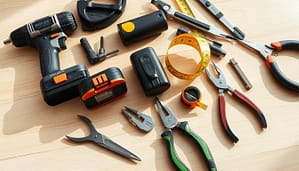
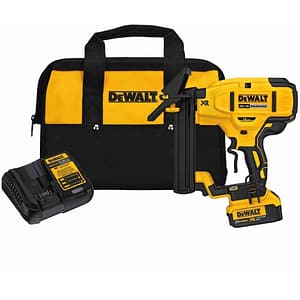
That “eco-friendly” label on your new power drill isn’t magic. In a world full of greenwashing, how do you find the real eco-friendly tools?
Forget the green leaf logos and vague promises. This playbook is your guide to the sustainable tool market. We’ll look at what really matters: the recycled materials, the energy used, and what happens when the tool breaks.
It’s not just about feeling good. Companies that focus on sustainability are doing well. As the source material notes, “ESG criteria have moved from a compliance checkbox to an investment prerequisite.” Smart sustainability is now key for finances and strategy.
This isn’t about buying a green conscience. It’s about making smart choices. So, what should you look for in that new drill or driver? Let’s build a toolkit for those who care about the planet.
Defining “green” for pro tools: performance + impact
Forget the “eco-friendly” sticker on the box. In the world of pro tools, a green tool isn’t just about one feature. It’s about how well it performs and its environmental and social impact. This includes everything from mining to recycling or reuse.
A “green” tool is one that’s been thoroughly checked. It’s not just about what it does, but also how it affects the planet. This means looking at its whole life cycle, not just a single feature.
Life-cycle assessment (LCA) is the key to judging a tool’s greenness. It looks at everything from energy use to shipping emissions. Sustainability is now a key part of a tool’s value.
This isn’t just about feeling good. It’s about a fundamental shift in value. The real “green” in a tool is measured by its performance and its journey. Let’s break down the two faces of the so-called “green” tool.
Beyond the Green Sheen: Performance Metrics That Matter
Performance is the non-negotiable baseline. A “green” tool that fails is just waste. The real innovation is in tools that are powerful, durable, and energy efficient.
A brushless motor that uses less battery power is a green tool. A battery platform that works across many tools is also a green choice. Performance and efficiency are key.
The Impact Ledger: From Cradle to Grave (and Beyond)
This is the “impact” side of the equation. It’s the part of a tool’s story that’s often invisible. A truly green tool has a transparent ledger:
- Material Sourcing: Where did the materials come from? Are they recycled?
- Manufacturing: Is the factory powered by renewables? What’s the water and energy footprint?
- Use Phase: How much energy does it consume per hour of work? Does it have power-saving modes?
- End-of-Life: Is it easy to recycle, or destined for a landfill?
The ultimate “green” tool is designed for multiple lives. This isn’t just recycling; it’s designing for disassembly and repairability.
| Feature | Greenwashing (The Facade) | Genuine Green (The Real Deal) |
|---|---|---|
| Material Focus | Uses “eco” packaging, but tool is made with virgin plastics. | Uses post-consumer recycled (PCR) plastics and recycled metals in the tool body. |
| Energy Claims | “Energy Star” label on a tool that is inefficient in real-world use. | Published, third-party verified Environmental Product Declaration (EPD) showing a lower carbon footprint per hour of use. |
| End-of-Life Plan | No mention of repair or recycling. “Dispose of according to local regulations.” | Company offers a take-back program, provides repair manuals, and publishes a detailed end-of-life strategy. |
| Transparency | Vague claims like “eco-smart” with no data. | Publishes a full Life Cycle Assessment (LCA) or Environmental Product Declaration (EPD) for the tool. |
The difference is accountability. A genuinely eco-friendly tool is transparent. It’s not just about a “green” feature; it’s about a green system. The real tools for the green build aren’t just in your toolbox—they’re in the boardroom, the design lab, and the recycling facility. The EPD (Environmental Product Declaration) is the new spec sheet. If you can’t find one for a “green” tool, the green you’re seeing might just be the paint.
Materials: recycled steels, bio-based grips, PFAS alternatives
Forget what you know about tool composition; the real story isn’t in the torque or the torque, but in the molecules. We’re moving beyond the era of virgin materials and forever chemicals. Today’s green tool isn’t just a different color—it’s built from the atoms up with recycled steels, bio-composite grips, and a conscious rejection of toxic “forever chemicals.” This is the materials science revolution, and it’s not just greenwashing. It’s a fundamental redesign.
Forget the idea that “green” means “greenwashed.” The real shift is in the material DNA of the tools themselves. We’re not just talking about a recycled plastic housing; we’re talking about the molecular recipe of the tool. The European Green Deal and its Ecodesign for Sustainable Products Regulation (ESPR) are already forcing the issue, mandating that products be durable, repairable, reusable, and recyclable. This isn’t just policy—it’s a blueprint for the next generation of tools.
The New Steel: From Scrap to Socket
Let’s start with the bones: the steel. The days of virgin alloy steel being the only option for a “pro-grade” tool are over. Modern recycled alloy steels are the unsung heroes of the circular economy. They’re not just melted-down soda cans; they’re sophisticated, high-performance alloys engineered from post-industrial and post-consumer scrap. The key is the process: advanced electric arc furnaces and precise alloying now create steels with torque and tensile strength that meet or exceed virgin steel. The recycled materials loop is now a closed loop, and the environmental payoff is massive, slashing carbon emissions by up to 75% compared to virgin ore.
Beyond the Grip: The Bio-Composite Revolution
Next, the part you touch: the grip. For decades, it was all petrochemical-derived rubber or plastic. The new wave? Bio-composites. These aren’t your flimsy, “eco” gimmicks. We’re talking about bio-based grips made from flax, hemp, or recycled bio-polymers that rival the durability and vibration-dampening of their petroleum-based ancestors. They ditch petrochemicals, reduce the tool’s carbon footprint, and can even be engineered for a superior, less-slip grip that’s easier on the hands during a 10-hour shift.
The PFAS Problem and Smarter Coatings
This is where the fight gets microscopic. Per- and polyfluoroalkyl substances (PFAS) are the “forever chemicals” once used in non-stick, water-resistant, and anti-corrosion coatings. They don’t break down, and they’re everywhere. The eco-friendly tools of today are moving to PFAS-free alternatives. Think advanced ceramic coatings, PVD (Physical Vapor Deposition) coatings, and new polymer blends that provide slick, durable, and non-stick surfaces without the environmental and health hazards. The performance is there, minus the toxic legacy.
Here’s a breakdown of how these recycled materials and new formulations stack up:
| Material | Traditional (Virgin) | Green Alternative | Key Benefit | Performance Impact |
|---|---|---|---|---|
| Steel Alloy | Virgin, ore-based steel | Post-industrial/Post-consumer recycled alloy | ~75% lower carbon footprint | No loss in torque or hardness |
| Grip Material | Petro-chemical rubber/TPE | Bio-composite (flax, hemp, recycled polymers) | Biodegradable components, no petrochemicals | Equal or better shock absorption, less hand fatigue |
| Surface Coating | PFAS-based non-stick | Ceramic/PVD coatings, PFAS-free polymers | No “forever chemical” pollution | High lubricity, corrosion resistance, equal durability |
| Fasteners/Housing | Virgin plastics (ABS, Nylon) | Recycled, glass-filled polymers | Diverts plastic from landfill, lower energy use | Maintains structural integrity, UV-stable |
This table isn’t just a comparison; it’s a map of the new material world. The EU Green Deal and its ESPR are not just regulations; they’re the new spec sheet. They mandate the durability and recyclability that make these eco-friendly tools not just a niche choice, but the future standard. The takeaway? The green in your toolbox is no longer just a color—it’s the new gold standard.
So, when you pick up a tool built with these principles, you’re not just holding a driver or a saw. You’re holding a product of material science that has considered its entire lifecycle, from recycled materials to responsible end-of-life. It’s not a compromise. It’s an upgrade.
Energy efficiency: brushless motors, power management firmware
Goodbye to the loud, smoky power tools of the past. Today’s power tools are quiet and green. The battery is key, but the real magic is in the brushless motor and its digital brain.
This combo isn’t just about longer battery life. It’s about getting more power and smarts from every battery electron.
The Brushless Revolution: Smarter, Not Harder
The old brushed motor is like a gas-guzzling V8 from the ’70s. It works but wastes a lot of energy. The brushless motor is more like a hybrid, using smart electronics to power it.
This means more power, longer battery life, and tools that run cooler. It’s like switching from a Hummer to a Prius—both get you there, but one is smarter and quieter.
This isn’t just tech talk; it’s what makes modern eco-friendly tools special. The efficiency gains are huge:
- Up to 30% longer runtime from the same battery as brushed motors.
- Less heat, which means less wear and tear on the tool.
- More power and torque, without the drops seen in older tech.
The Brain in the Machine: Digital Power Management
The brushless motor is the tool’s efficient muscle. The power management firmware is its precise brain. This firmware manages every electron with microsecond accuracy.
Imagine a tiny engineer inside your drill, always adjusting. It watches temperature, load, and battery health, adjusting power to prevent burnout and boost efficiency. This digital smarts prevents battery over-discharge, manages heat, and optimizes power for the task at hand.
Consider the difference between motor technologies:
| Motor Type | Efficiency | Lifespan | Power Management |
|---|---|---|---|
| Brushed Motor | 60-75% | ~500-1000 hrs | Basic on/off |
| Brushless Motor | 85-90% | 10,000+ hrs | Advanced digital firmware |
This mix of hardware and software makes a modern eco-friendly tool truly green. It’s not just about recycled materials; it’s about the smarts that save every watt of battery power. This efficiency means less need for battery recycling as tools last longer. The real sustainability story is in the microchips and code that make every job more efficient.
Packaging/logistics: right-sizing, rail/sea freight, recycled pulp
The journey of a tool from factory to toolbox is huge and often unseen. It’s a big part of its environmental story. We’re looking at the whole supply chain, not just the tool itself. Right-sized packaging, smart shipping, and recycled materials are key to a green footprint.
The Shrink-Wrapped Absurdity: Right-Sizing the Box
Have you seen a drill bit in a huge box or a wrench in a lot of foam? It’s not just bad design. It’s wasteful and expensive. Right-sizing packaging fixes this easily. It uses less material and fuel for shipping.
Less packaging means more tools in one box. This cuts down on trucks on the road. It’s good for the planet and saves money.
From Air Freight to Rail Freight: The Carbon Math of Shipping
How a tool travels is as important as what it’s packed in. The old “need it yesterday” way used a lot of air freight. Now, companies are choosing better ways to ship.
They’re moving big shipments by sea or rail. This cuts down on carbon a lot. It’s not just green; it’s smart business.
Beyond the Box: Pulp, Programs, and the End of the Line
Packaging is changing fast. Molded pulp, from recycled paper, is replacing old foam. It’s made to be recycled again.
The best companies think about the whole life of a tool. They have take-back programs to recycle tools. This is good for the planet and for business.
Repairability: parts catalogs, teardown scores, modular assemblies
A tool’s true environmental value is shown over time, not just at first use. A drill that can be fixed, not just used, is truly green. We’re moving away from a throwaway culture, pushing for the right to repair with passion. This isn’t just about fixing things; it’s a battle against planned obsolescence, fought with simple tools.
In the European Union, this isn’t just a belief—it’s law. The EU’s Right to Repair and Ecodesign rules are leading the way globally. They demand tools that last longer and are easier to fix. For pros, a tool’s greenest feature is its service life. A sustainable tool has a parts catalog, not a funeral.
The Anatomy of a Repairable Tool
What makes a gadget disposable versus a lasting tool? It’s a repairable design that values longevity. This makes “green” a real, practical idea.
- Parts Catalogs Are the New Tool Bible: A detailed, public parts catalog is key to longevity. Without it, you own a useless paperweight.
- Teardown Scores Matter: Inspired by iFixit, a tool’s “repairability score” is its environmental report card. High scores mean tools with modular parts and easy-to-replace components.
- Modular Assemblies Are Key: This is the heart of repairable design. Tools built in modular blocks mean you can replace parts, not the whole tool. It’s the opposite of the “sealed-for-life” approach.
The table below shows the difference between a tool designed for longevity and one meant to be thrown away.
| Design Feature | Pro-Repair Design | Anti-Repair Design |
|---|---|---|
| Fasteners | Standard Torx/Phillips screws, accessible clips | Proprietary, tamper-proof, or glued assemblies |
| Component Modularity | Swappable motor, battery, and gear modules | Fully potted or welded assemblies |
| Parts Availability | Full parts catalog with exploded diagrams | “Whole unit replacement only” policy |
| Service Documentation | Publicly available service manuals and schematics | “No user-serviceable parts inside” |
Verifying the “Right to Repair”
How do you know if a tool is truly green? Look for honesty. A credible EPD (Environmental Product Declaration) should show a tool’s lifespan and fixability. The best brands share their parts diagrams and service manuals. They also score well in teardown analyses. The greenest tool is the one you keep the longest, not the cheapest.
Battery end-of-life: transport rules, second life, recycler yield
When your cordless tool’s battery dies, it’s not the end. It’s the start of a journey with strict rules. The life of a power tool battery is complex, involving regulators, logistics experts, and recyclers. We’re moving beyond just throwing it away.

A lithium-ion battery can be a fire hazard. Its final chapter involves chemistry, rules, and economics. We’re exploring the end of its life, including transport rules, a second life, and material recovery.
The First Hurdle: The UN 38.3 Transport Tango
Before a dead battery can be recycled or reused, it must travel. The UN 38.3 transport rules are strict. They ensure safe transport of damaged lithium-ion cells.
This is the first step in recycling. Mess it up, and your recycling program could fail.
Act Two: The “Second Life” Economy
What if a battery’s first life is just the beginning? The “second-life” market is exciting. A battery that’s lost power can be used for other things.
This is not just greenwashing. It’s a way to make money from old batteries. But, it requires careful testing and management.
The Final Reckoning: The Recycler’s Ledger
When a battery dies, it goes to the recycler. This is where the circular economy gets real. The goal is to recover valuable materials like lithium and cobalt.
The EU Batteries Regulation and Extended Producer Responsibility schemes are key. They make producers pay for recycling. The math is simple: recycling can save a lot of energy and money.
| Material | Typical Recovery Rate | Virgin vs. Recycled (Energy Savings) |
|---|---|---|
| Lithium | ~70-80% | Recycling saves ~50% energy vs. mining |
| Cobalt | ~90-95% | Recycling avoids conflict-zone mining |
| Nickel | ~90% | Significantly reduces acid mine drainage risk |
| Copper | ~99% | Major energy savings over ore processing |
The table shows the importance of recycling. It’s not just about the tool you buy. It’s about the afterlife you choose. The EU Batteries Regulation is changing the game, demanding more recycled content and take-back programs.
For pro users, the “green” in your tool is more than watts or torque. It’s about the full cycle, from charge to recovery. The true cost of a tool now includes its responsible end.
How to verify claims: EPDs, LCAs, credible certifications
Welcome to the Wild West of ‘green’ marketing. Here, every tool is ‘eco-friendly’ and every claim is ‘sustainable.’ It’s a noisy place, and getting greenwashed is easy. To find the real deal, look for EPDs, LCAs, and credible certifications. Think of this as your guide against greenwashing.
Environmental Product Declarations (EPDs): The “Nutrition Label” for Tools
An Environmental Product Declaration (EPD) is not just marketing. It’s a detailed, third-party verified document that shows a product’s environmental impact. It’s like a nutrition label for tools, showing the environmental impact from start to finish. A good EPD is based on a Life Cycle Assessment (LCA).
Verification is key. A real EPD is checked by a third party. If a brand says it’s “green” but won’t show an EPD, that’s a warning sign.
Life Cycle Assessments (LCAs): The Whole Story, Cradle-to-Grave
An EPD is like a label, but an Life Cycle Assessment (LCA) is the full report. An LCA is a detailed analysis that supports a credible EPD. It looks at everything, from mining to recycling.
For eco-friendly tools, an LCA shows the biggest impact is in making and using the tool. That’s why brushless motors and energy-saving designs are good.
The Certification Jungle: Separating the Wheat from the Greenwash
Not all certifications are the same. Some are strict, third-party checked, and really mean something. Others are just for show. Your job is to tell the difference.
Here’s a breakdown of real certifications versus marketing tricks:
| Certification | Issuing Body / Backing | What It Actually Means | Credibility Score |
|---|---|---|---|
| EPEAT | Global Electronics Council | Comprehensive standard for electronics (and some tools), covering materials, energy, and end-of-life. Requires third-party verification. | High. Government-mandated for federal purchases in the US. |
| Energy Star | U.S. EPA and DOE | Focuses on energy efficiency during use. A solid baseline, but doesn’t cover full lifecycle. | High for energy use, but limited scope. |
| TCO Certified | TCO Development | Comprehensive, covering environment, social responsibility, and worker safety in manufacturing. | Very High. Rigorous, third-party verified, and specific to IT products. |
| Self-Declared “Green” Labels | Company Itself | Vague, unverified claims like “Eco-Friendly!” or “Made with Recycled Content!” with no data. | Low. This is often greenwashing. Demand the data. |
| Type I Ecolabels (e.g., EU Ecolabel, Nordic Swan) | Government or Independent Bodies | Multi-criteria, life-cycle based, and third-party verified. Highly credible. | Very High. |
The world is changing. The EU’s Corporate Sustainability Reporting Directive (CSRD) and digital product passports are making digital traceability key. Soon, scanning a QR code might show a tool’s full LCA data and material passport, leaving no room for greenwashing.
Verifying claims is not about being cynical. It’s about being realistic. Look for the proof behind the promise. Ask for the EPD, ask for the LCA report, and seek out certifications with real value. Your best eco-friendly tool might be a sharp B.S. detector.
Jobsite checklist: charging plans, idle-kill, solar carts
Forget the glossy brochures and eco-certifications. The real test of green tools is in the mud and dust of an active jobsite. It’s about using eco-friendly tools and building a low-impact workflow. This checklist is your daily guide to making it happen.
1. The Charging Corral: A Plan, Not an Afterthought
Random charging creates chaos and kills batteries. A charging plan is key to avoiding waste. Create a central, secure area with a dedicated power source.
Stagger charging cycles to avoid peak energy demand. This ensures your eco-friendly tools are always ready without wasting energy. It’s about smart energy management, not just plugging in.
2. The Idle-Kill Imperative: Slaying the Silent Power Vampire
An idling tool is a waste. Modern eco-friendly tools are efficient, but can’t beat wasted energy. Idle-kill functions are a must.
Set automatic power-down timers for tools and larger equipment. This can reduce phantom power drain by up to 30%. It means fewer charge cycles and a longer battery life, delaying battery recycling.
3. The Solar-Powered Jobsite: Beyond the Gimmick
The ultimate green step is to break free from the grid. Solar carts and portable power stations are more than gimmicks. A 400W solar panel setup can charge an entire gang box on a sunny day.
This isn’t just for show. It’s about resilience and true on-site generation. Pair a solar generator with a high-capacity power station for a micro-grid. This slashes fuel costs and emissions, providing silent, fume-free power.
The greenest tool is used in a smart, systematic way. It’s the synergy of eco-friendly tools, disciplined power management, and clean energy. This transforms sustainable products into a truly sustainable practice. It closes the battery recycling loop by respecting energy from capture to recycling.
ROI and payback timelines
Let’s look at the numbers. The “sustainability premium” on eco-friendly tools is not just a feel-good tax. It’s a smart investment with quick payback. Green tools are not just good for the planet; they make financial sense too.
Companies with strong ESG performance have 3.7% higher EBITDA margins than others. This shows that being green can boost profits. The initial cost of a durable, energy-efficient tool might seem high. But, the long-term savings are significant.

The cost of a green tool is different from a cheap, disposable one. You’re investing in a system, not just a tool. The repairable design means you can fix it, not replace it. This approach turns tools into assets, thanks to take-back programs and modular parts.
Here’s how you save money:
- Energy & Operation: Modern tools use 20-30% less energy. This saves money on your power bill.
- Battery Lifecycle: Quality tools avoid the need for frequent battery replacements. This extends their life and supports take-back programs.
- The Brand Equity Bonus: Being green can win you contracts. This is a soft ROI that matters.
So, how long does it take to pay off? A tool that saves 30% on energy and avoids two $150 battery replacements can pay for itself in under 24 months. After that, it’s all savings and brand value. The sustainability premium is an investment in a better, more profitable business.
Want to see the numbers for yourself? Our ROI worksheet makes it easy. It turns sustainability into a clear, defendable investment with a real payback timeline.
Conclusion
The Green Tool Playbook is more than a guide. It’s a big change. We’ve moved past just looking at torque and battery life. Now, we focus on a whole system.
This system includes recycled materials and a plan for when the tool’s battery dies. It’s not just about being eco-friendly. It’s about making tools last longer and setting a new standard.
The business case is based on facts. An EPD or LCA turns marketing into real data. It shows a company’s commitment to its impact.
From repairable design to reducing carbon footprint, it’s all part of the package. The battery recycling and take-back programs are essential, not extra.
This change puts the future of the trade in your hands. Every choice for eco-friendly tools matters. It shows the market wants tools that last, can be fixed, and are kinder to the planet.
The return on investment isn’t just in saving energy. It’s in building a trade that lasts. The job site of the future is not only more powerful. It’s also smarter and greener.