The corded tool is becoming outdated, stuck to the wall outlet. But the exciting part is in your hands, free from cords.
This change isn’t just about cutting the cord. It’s about the battery’s new role. We’ve moved from simple storage to smart power systems.
The key to this change is in the battery’s chemistry. Take DeWalt’s XR POWERPACK, for example. It’s like removing obstacles for electrons. This means more power and a longer battery life.
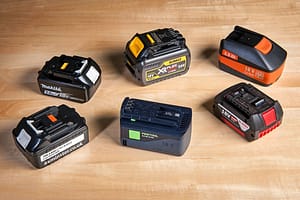
Brands like Makita and Bosch have also made a big move. They’ve created shared battery platforms. Now, one battery can power your drill, saw, and even a leaf blower. It’s smart business.
On a modern jobsite, adaptability is everything. Tools like DeWalt FlexVolt can change voltage quickly. Add rapid charging and tough designs, and you’re set.
The game has changed. It’s not just about keeping a charge. It’s about controlling a whole cordless system.
Motor Technology Advances
Imagine a motor that doesn’t waste energy on friction and heat. Instead, it converts every volt into usable torque. Welcome to the brushless era. This change is huge, like switching from a gas-guzzling V8 to an all-electric powertrain.
What do you gain? Less internal friction. Less waste heat. And more of your battery’s power turned into work at the tool’s end. It’s like the difference between a clunky rotary phone and a sleek smartphone.
Let’s talk about the real-world magic: efficiency gains. A traditional brushed motor is a bit of a drama queen. It creates sparks, wears down its own components, and throws a tantrum in the form of heat under load. A brushless motor is the stoic, efficient professional. It uses an electronic controller to manage magnetic fields, eliminating the brush-commutator interface. The result? Up to 30% more runtime from the same battery charge.
This leads to power-to-weight optimization. When your motor isn’t cooking itself, you don’t need heavy heat sinks or oversized housings. The tool gets lighter. Holding a drill overhead to fasten ceiling drywall feels less like a workout and more like precision work.
Heat management is the unsung hero here. Excessive heat is the enemy of both performance and longevity. It saps power, warps components, and turns your expensive tool into a paperweight. Brushless technology sidesteps this by design. With no brush friction generating excess heat, the motor runs cooler under heavy loads. This means you can push it harder, for longer, without hitting thermal shutdown.
Then there’s torque delivery. Old-school motors deliver power like a sledgehammer: all at once, with little nuance. Brushless motors are the scalpel. Their electronic brains can sense the load and adjust power output in real-time. Driving a screw into hard maple? It applies steady, consistent torque to sink it flush without stripping the head.
| Feature | Brushed Motor | Brushless Motor |
|---|---|---|
| Efficiency | Low (60-75%) | High (85-90%) |
| Heat Generation | High | Low |
| Power-to-Weight Ratio | Moderate | Excellent |
| Torque Control | Basic (on/off feel) | Advanced (electronic precision) |
| Maintenance | High (brush replacement) | Very Low |
So, what’s the bottom line for the professional on the job site? It’s not just about having more power. It’s about having smarter, more reliable, and more manageable power. The advance in brushless motors transforms the tool from a noisy appliance into a true partner. You stop wrestling with your equipment and start collaborating with it. And in a trade where time is money and precision is reputation, that’s not just an upgrade. It’s a revolution you can feel in your hands at the end of a long day.
Smart Integration Features
Today’s tools are not just dumb metal anymore. They have a digital brain and connect to your Wi-Fi. This isn’t science fiction; it’s your everyday life. We’re seeing tools become part of the IoT, with better data plans than your teenager.
This change means you have more control and tracking. Tools can even almost think for themselves. It’s a big leap forward.
At the heart of this change are systems like Milwaukee’s One-Key and DeWalt’s Tool Connect. These platforms turn your phone into a remote for your tools. You can set specific settings for tasks, like torque for cabinet hardware.
This level of tool connectivity makes planning and execution seamless. It’s a game-changer for work.

Inventory tracking is another big advantage. No more guessing where your tools are. Tools now send their location to your phone. It’s a simple idea that makes work more efficient and safer.
Security is also a big plus. Theft is a big problem, but smart tools have a solution. If a tool is stolen, you can lock it remotely. It’s a smart way to protect your tools.
The most exciting feature is predictive maintenance. Tools now keep logs of their performance. This helps prevent failures before they happen. It’s a big step towards better maintenance.
| Feature | Milwaukee One-Key | DeWalt Tool Connect | Bosch Professional 360° |
|---|---|---|---|
| Remote Control & Presets | Full control via app; custom profiles | Tool settings adjustment; mode memory | Limited remote control; basic presets |
| Inventory Tracking | Bluetooth tags for tools & equipment | Integrated tool tracking | Tool-centric location services |
| Theft Protection | Remote lock-out; location history | Tool disable function | Basic security lock |
| Performance Monitoring | Detailed logs for predictive alerts | Usage data and service indicators | Basic runtime and load monitoring |
| Job Site Integration | Document storage; task lists | Cloud-based job management | App-connected workflow |
So, what does this mean for work? Chaos gets organized. You waste less time looking for tools. Theft and equipment failures go down. The smart tools revolution makes work smarter, not harder.
This is just the start of the future of tool technology. As these systems grow, we’ll see even more advanced tools. For now, enjoy your new, tech-savvy foreman in your pocket. It’s here to make your work easier, one connected tool at a time.
Wireless Charging Developments
We’ve been using charging pads for a decade, but our tools are not yet cordless. The goal is to break free from the power brick. Is wireless charging for tools the next big thing or just a fleeting idea?
The idea is seductive. It uses electromagnetic fields to charge tools without metal contacts. Imagine a job site where tools recharge on their own. It offers connector-free flexibility, making life easier and reducing damage.
But, the job site is different from your home. It’s full of metal shavings, dust, and accidents. The idea of ‘drop-and-go’ doesn’t quite match reality. Let’s explore the gap.
| Challenge Category | Job Site Reality | Ideal Promise |
|---|---|---|
| Alignment & Debris | A battery covered in dust needs perfect placement on the pad. A small piece of debris can stop charging. | Charging works no matter how the tool is placed. Debris doesn’t matter. |
| Power Transfer & Speed | Inductive charging is less efficient than direct contact. Fast charging a big battery gets very hot, needing special cooling. | Charges as fast as wired chargers, without overheating. |
| Cost & Standardization | Each brand might have its own standard, like Betamax vs. VHS. You’d need many expensive charging pads. | A single ‘Qi-for-Tools’ standard would work for all brands, making charging easy. |
The lack of a standard is a major issue. Without one, using wireless charging will be complicated. Manufacturers want to keep you tied to their products, but pros want freedom. If you need a different pad for each tool, it’s not convenient.
Is it viable? Yes, for certain situations. Integrated drop-and-go stations in vans or workstations are great. They save wear and make life easier for often-used tools. But for a general construction site, it’s not ready yet. It needs to get tougher, smarter, and agreed upon by all. True cordless freedom is coming, but it’s not here yet.
Power Management Systems
If your cordless tool were a sports car, the power management system would be its pit crew. They optimize performance to keep you ahead. It’s not just about saving energy; it’s about using every bit of power wisely.
Modern systems work like an onboard mechanic with a PhD in physics. They watch load, temperature, and demand in real-time. When you face tough wood, they don’t freak out. They smartly use power, focusing on torque over speed.
This is where tool connectivity really shines. In a multi-battery setup, these systems communicate. They balance power, making sure no battery gets left behind. It’s a fair way to share energy, keeping your tools in sync.
Thermal protection keeps your investment safe. These systems have more sensors than a smartwatch. They slow down power if it gets too hot, saving your tool from damage.
Runtime optimization is the ultimate goal. It’s like a financial advisor for your battery’s energy. The system tweaks settings to make your tool last longer. You won’t run out of power at 2 PM anymore.
This battery innovation turns the tool into a smart partner. It’s the hidden software hero inside the hardware, making smart choices you don’t see but feel. The real question is, how did we ever work without it?
Professional Application Impact
The gas can is becoming a relic. Its obituary is being written by modern professional cordless tools.
We’ve moved past wondering if battery tools can keep up. Now, the question is: what can we do now that was impossible with a cord?
The frontier has exploded. We’re not just talking about drills and saws anymore. High-torque chainsaws, commercial-grade lawn mowers, and trenchers are now part of the “cordless outdoors.”
On the heavy construction side, the list is even more impressive. Demolition breakers, concrete vibrators, and powerful tower lights are now cordless. Systems like the Milwaukee MX FUEL range are like mobile power plants, making portable generators outdated.
The math is simple but profound. Starting a task no longer means finding an outlet or fueling up. It’s grab, trigger, go. This saves minutes, which adds up to hours saved per week.

The job site transformation is underrated. No more generator drone or gasoline exhaust. This means better communication and focus. It’s like working in a library, not next to a jet engine.
This shift has changed what’s possible and preferred. For tasks needing precision or uninterrupted workflow, cordless is now the only choice. Choosing a leading cordless power tool brand is key for business efficiency.
The impact goes beyond the tools. It changes work’s rhythm and environment. The cordless revolution is over. We now live in the cordless standard.
Charging Infrastructure Evolution
The real challenge of cordless tools isn’t the batteries. It’s keeping all the tools charged for a 6 AM start. Job sites are filled with extension cords and chargers, leading to tripped breakers and idle crews. Even the best drill is useless if its battery is dead.
The real change is happening behind the scenes. It’s not just about the tools in your hand. It’s about how you power them all.
We’re moving from focusing on tools to managing the whole operation. It’s like fueling a motorcycle versus managing a fleet of jets. The old way was simple: one tool, one battery, one charger. Now, we need to power an entire crew’s tools overnight and top them up at lunch without overloading the electrical panel.
The answer is a three-pronged approach. First, we have rapid charging solutions that can top up a battery in under 15 minutes. This means workers can quickly swap batteries, grab a coffee, and get back to work.
Second, we have fleet charging systems. These are like mission control centers for cordless tool technology. They store, charge, and manage multiple batteries at once. These systems don’t just charge; they communicate and manage power to avoid overloading.
They provide a single point of control for all your tools. Managers can check charge status remotely, track battery health, and get alerts. Theft protection is built-in, making charging a managed, data-driven process.
Third, we need to talk about job site power management and the grid. Charging two batteries is different from charging twenty. Sites with many chargers need a lot of power. Contractors must plan for dedicated circuits, temporary power distribution, and even on-site battery banks or generators.
The table below shows the difference between the old way and the new approach:
| Aspect | Traditional Plug-in Method | Modern Fleet Charging System |
|---|---|---|
| Scale | Designed for 1-2 users, a few tools. | Built for crews, managing dozens of tools and batteries. |
| Management | Manual, visual checks. Chaos. | Digital monitoring, remote status, and health reports. |
| Power Draw | Low, isolated risk of tripping breakers. | High, managed load balancing to protect site power. |
| Charging Speed | Standard (2-5 hours). | Rapid & ultra-rapid (15 min – 1 hour). |
| Theft & Security | Tools and batteries left vulnerable on benches. | Integrated locking and asset tracking features. |
While wireless charging pads are cool for home gamers, pros are solving a bigger problem. They’re building a smart, scalable energy grid that powers tools. The infrastructure is now a key part of the strategy. The next big thing won’t be a battery that lasts longer. It will be a charging cabinet that knows which battery will fail next and has a spare ready.
This evolution changes how we value tools. You’re not just buying gadgets; you’re investing in uptime. In the professional world, uptime is everything. The push for better wireless charging and faster cells is important. But the real win is in building the infrastructure that keeps the whole team running.
Environmental Considerations
True sustainability in tool technology isn’t just about what’s not there at the job site. It’s about what happens from mine to landfill. The switch from loud, polluting engines to quiet, clean cordless tools is a big win. But it’s just the start of a bigger story.
Let’s look closer. The environmental ledger for cordless tool technology has more than just the use phase. We traded loud engines for lithium-ion packs. Is that a fair trade?
First, there’s the raw material hustle. Getting lithium for batteries is hard work, using a lot of water and changing landscapes. It’s not as simple as drilling for oil. The real battery innovation challenge is to lower this ecological cost.
Then, there’s manufacturing. Making these smart tools uses a lot of energy. The carbon footprint of a high-tech drill is not zero. It’s a debt made before it’s ever used.
The story gets more hopeful here. The most important part is the end-of-life plan. Comprehensive battery recycling programs are now essential. They close the loop for cordless tool technology. Manufacturers are building take-back systems to recover valuable materials.
Regulatory changes are also shaping design. Efficiency standards push for more work from less energy. Right-to-repair laws make it important to have batteries that users can swap out. This is battery innovation with a conscience.
So, where do we stand? The green promise of cordless tools is real, but it’s conditional. It depends on:
- Transparent supply chains that reduce mining impacts.
- Investment in closed-loop recycling to keep materials in circulation.
- Design for disassembly and longevity, not just peak power.
- Industry-wide adoption of compatibility standards to make recycling and repair scalable.
The next wave of battery innovation won’t just be about power or torque. It will be about its full-circle responsibility. The ultimate power-to-weight ratio might be the ratio of performance to planetary impact. That’s a metric worth optimizing for.
Market Adoption Trends
The adoption of new technology follows a social script. For professional cordless tools, this script is a thriller. It has chapters written by different trades.
For weekend warriors, it’s about convenience and looking cool. Pros, on the other hand, look at the cost. They ask if the tool will save them money over time.
Electricians and low-voltage techs are early adopters. They love the mobility and precision of cordless tools. It makes their work more efficient.
On a concrete formwork site, the sound is different. You hear the hum of corded tools. Here, there’s more resistance to change.
The adoption map for professional cordless tools is not uniform. It’s a patchwork of different factors. Cost, habit, and training gaps are the main hurdles.
Contractors might not want to spend money upfront. They don’t see the long-term savings. Experienced workers prefer what they know, even if it’s old.
There’s also a training gap. A tool is useless if the user doesn’t know how to use it. Companies that train their workers see big improvements.
This uneven uptake shows the importance of understanding human factors. It’s not just about the tech. It’s about how people use it. As seen in technology industry outlooks, success depends on these human aspects.
So, who’s buying? The answer shows what each industry values. It reflects their pace, priorities, and readiness for change.
Future Technology Roadmap
If today’s cordless tools seem like science fiction, wait until you see what’s next. The future is going to make our current tools look ancient. We’re on the cusp of something amazing.
Battery innovation is leading the charge. Solid-state cells are on their way, promising more energy than today’s lithium-ion packs. Imagine a drill that lasts a week on one charge. That’s the dream.
Brushless motors are getting smarter. Soon, they’ll adjust their power based on what they’re working with. This means better performance without needing more power.
Smart tools are becoming more than just gadgets. They’ll predict when they need maintenance and even order parts. Your impact driver will manage its own upkeep.
Wireless charging will soon be everywhere. Imagine charging your tools on workbenches, in toolboxes, or even truck beds. It’s like having a power grid at your fingertips.
This connectivity will turn tools into a network. Each tool will share data, creating a digital twin of your project. It’s not just about using tools; it’s about leading a team of devices.
Who will lead this revolution? Expect to see unlikely partnerships. Companies like Milwaukee or DeWalt teaming up with tech giants like NVIDIA or Qualcomm. Their goal? Tools that think for themselves.
The cordless revolution is far from over. It’s just getting started. By 2030, job sites will be quieter, cleaner, and incredibly efficient. The tool in your hand is just the start of something incredible.