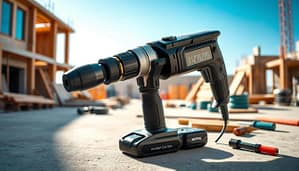
Nikola Tesla once dreamed of sending electricity through the air. Now, we dream of our drill batteries lasting longer. The dream of wireless power is becoming a reality.
This isn’t just a trend. It’s a big change. The market for wireless power is growing fast, at a compound annual growth rate of over 30%. This growth is hard to ignore.
The old way of dealing with power is outdated. We used to deal with cords and power banks. Now, we’re moving towards ambient energy. It’s like Wi-Fi for your devices, making power easy to access.
There are two main ways to achieve this: near-field and far-field technologies. They’re being used in everything from Industrial IoT sensors to our phones. We’re moving from a fixed power system to a more flexible one.
Expert explanation of wireless power transfer principles
Forget magic wands—the real trick to wireless charging lies in two distinct families of electromagnetic technology. I like to think of them as the close-up magician and the stage illusionist. The close-up act, called Near-field, works over short distances and includes the two methods you’re most likely to encounter. The grand stage act, Far-field or “power at a distance,” aims for longer ranges, like charging a phone across a room. Today, we’re focusing on the near-field duo, as they’re the backbone of current cordless innovations.
So, what is Near-field wireless power? It’s all about creating a tiny, invisible bubble of energy. This bubble is an electromagnetic field generated by a transmitter coil. When a receiver coil enters this bubble, energy is transferred without any physical contact. It’s beautifully simple in theory, but the execution splits into two camps with very different personalities.
The first and most common method is Magnetic Induction, the foundation of everyday inductive charging. Here’s how it works: an alternating current in the transmitter coil creates a fluctuating magnetic field. This field induces a voltage in the nearby receiver coil, which then powers the device. The catch? This coupling is incredibly fussy. It demands precise alignment and very close proximity—think millimeters. Misalign the coils, and the efficiency plummets faster than a bad stock tip.
You’ve experienced this if you’ve ever used a wireless charging pad for a phone or an electric toothbrush. The toothbrush is the classic example. It only charges when seated perfectly in its cradle. That’s magnetic induction in a nutshell: intimate, efficient, but demanding.

Enter the cooler sibling: Magnetic Resonance. This is a near-field technology with more spatial chill. Instead of just inductive coupling, both the transmitter and receiver coils are tuned to the same resonant frequency. Think of it like an opera singer shattering a glass with the right note. When they resonate together, energy transfers more efficiently and can tolerate a larger gap and some misalignment.
The practical difference is huge. With magnetic resonance, you could have a charging zone on a workbench. Park your tool cart within that zone, and it starts charging—no precise docking required. It’s the difference between plugging in an Ethernet cable and connecting to Wi-Fi. This flexibility is why magnetic resonance is the darling for next-gen professional cordless innovations.
And the stage illusionist, Far-field? That’s the dream of beaming power over meters, not centimeters, using focused radio waves or lasers. It’s promising but is mostly in the “cool prototype” phase for most industries.
The bottom line for professionals is this: understanding this electromagnetic wizardry matters. Knowing whether your new gear uses finicky magnetic induction or more forgiving magnetic resonance directly impacts how you integrate it into a workflow. It’s the physics that will determine if your cordless innovation feels like liberation or just another frustrating gadget.
Current implementation methods and limitations
Today’s wireless power world is a mix of theory and real-world messiness. Lab demos show perfect energy transfer. But, real-world installations are chaotic, with physics, human mistakes, and dirt getting in the way.
Inductive charging is the top player, powering many industrial sensors and IoT devices. It’s elegant but tricky. A small misalignment can greatly reduce charging efficiency. This makes you wonder if we’ve just traded one problem for another.

The main issues are alignment, interference, and obstacles. Aligning a dirty sensor on a pad is hard. Metal debris or other equipment can block the electromagnetic field. Even a cable or dust can stop contactless charging.
The market offers many wireless power solutions, each with its own trade-offs. The table below shows the current options for your shop floor.
| Technology Type | Primary Use Case | Alignment Tolerance | Effective Distance | Noted Efficiency Range |
|---|---|---|---|---|
| Inductive Charging | Stationary sensors, tool caddies | Very Low (mm precision) | 0 – 10 mm | 70% – 90% |
| Resonant Charging | Mobile robots, AGVs | Moderate (cm range) | Up to 400 mm | 60% – 85% |
| RF Harvesting | Very low-power sensors | Very High (omnidirectional) | Several meters | < 1% (extremely low) |
Heat and waste are big issues. Lost energy turns into heat. In crowded control panels, this is a big problem. It’s not just about charging; it’s also about cooling.
So, what’s the current state? We have promising tools but they’re not perfect. They work well in labs but struggle in real-world settings. The fight for better charging efficiency goes on. For now, using wireless power means dealing with real-world limits. We’re making progress toward a cord-free future, but we’re not there yet.
Field Trial Results
Enough theory. Let’s see what happens when a half-ton robot meets the factory floor.
This is our mythbusters episode for power without plugs. I’ve looked at case studies to find real results.

How do autonomous mobile robots do without docking stations? What’s the real uptime gain for AGV fleets using resonant floor pads?
We’re moving from simple “phone on a pad” to serious “machine on the move.” The uses are big: complex warehouses, dangerous places, and 24/7 logistics centers.
The data shows a strong story. It’s not just easy; it’s about less downtime and more flexibility. These trials turn cordless innovations into reliable tools.
Yes, there have been some fun and costly lessons. But the results are clear, changing the game for industrial mobility.
Real-world testing in professional environments
Forget the lab; the real test for contactless charging is a day in a grimy warehouse. This is where theory meets reality. It faces vibration, grime, and the pressure of productivity.
Professional applications are growing fast. From car assembly lines to hospital sterile fields, the goal is to cut cords. This reduces costs and removes safety hazards.

So, what does validation look like? It’s less about white coats and more about hard hats. Testing now includes real-world variables.
Let’s break down the key battlegrounds:
- Manufacturing: Inductive charging pads are in workstations. Tools like impact wrenches charge through metal shavings and coolant mist. The test? Reliability over thousands of cycles, immune to machinery’s hum and shake.
- Warehousing & Logistics: AGVs and handheld scanners are tested. The focus is on interoperability—can different devices charge from the same pad? Performance under stress means a scanner in a damp corner or covered in dust should power up.
- Healthcare: This is the high-stakes league. Imagine a surgical tool that can be fully sterilized, never plugged in, and always at 100% charge. Trials in operating rooms scrutinize electromagnetic interference and the reliability of the power link during a procedure. A dead battery isn’t just inconvenient; it’s a crisis.
The data from these trials is the industry’s most valuable currency. It answers the questions every operations manager has. Can the system handle a 24/7 shift schedule without overheating? What’s the true efficiency loss when a tool is slightly misaligned on the pad? Does the convenience outweigh the upfront cost?
In essence, real-world testing transforms inductive charging into a robust industrial tool. It’s the difference between a concept that works in a PowerPoint and one that survives a month in a packaging plant. The feedback loop from these environments is ruthlessly honest, driving rapid iterations in coil design, thermal management, and communication protocols.
This isn’t just about keeping batteries full. It’s about enabling workflows we couldn’t imagine before. A power drill that charges from the workbench it sits on, oblivious to sawdust and coffee spills. An inventory robot that tops up its battery for 5 minutes between tasks, never leaving the floor.
The verdict from the field is becoming clear. Where reliability trumps all, contactless charging is not just passing the test—it’s starting to set the curve.
Charging speed and efficiency measurements
This leads to a shift in strategy: opportunity charging. You’re not waiting for “empty.” You’re topping up during breaks. The speed metric changes from “time-to-full” to “juice-per-minute.”
If you can add 20% battery in 15 minutes without a cord, that’s a win. Even if the system’s peak charging efficiency isn’t stellar.
But don’t ignore the cost of that win. Every percentage point of lost efficiency is money. You’re paying for the electricity that charges the tool and heats the air. Over hundreds of cycles, this adds a cost to your budget. It’s the convenience tax.
Not all wireless methods are created equal. The trade-offs are stark:
| Method | Typical Efficiency | Effective Distance | Heat Generation | Best For |
|---|---|---|---|---|
| Inductive (Qi-like) | 60-75% | 0-5mm (Precise alignment) | High | Stationary, low-power devices |
| Resonant | 70-85% | Up to 50mm (Some misalignment OK) | Moderate | Professional wireless charging tools, workbenches |
| Far-field (Radio/IR) | <10% (Currently) | Meters | Low | Low-power sensors, future concepts |
The table shows the story. Resonant technology is today’s best for wireless charging tools. It offers a good balance of charging efficiency and distance. Inductive is finicky and hot. Far-field is the wild west, promising freedom but losing a lot of charging efficiency.
The industry’s new goal is “fast wireless charging.” They aim to make resonant systems faster and more efficient. The goal is to make charging faster without losing too much efficiency. Is it worth it? For many sites, the benefits already outweigh the costs, as seen in wireless power systems revolutionizing tool technology.
The final verdict isn’t just a number. It’s a curve. It’s understanding that freedom from cords comes with an energy tax. Your job is to decide if the benefits of seamless charging outweigh the lost efficiency and time. The data is your map. Welcome to the new frontier.
Expert Interviews
Press releases are polished. Investor decks are slick. But what’s actually happening in the labs? To understand the future of cordless tech, you need to talk to the people making it.
I’ve been talking to the brains at WiTricity, Qualcomm, and Energous. They’re the ones who think in electromagnetic fields. Their work isn’t just about numbers; it’s about late-night discoveries and navigating through rules.
What keeps them up at night? Making inductive charging strong enough for industrial use. What gets them excited? The chance to make magnetic resonance work in real-world settings. Their world is a game of partnerships and mergers, all focused on one goal: making it reliable.
This section shares their stories. We’ll dive into the human side of the tech—the hard work, the risks, and the next big leap in inductive charging. Forget the buzz. Let’s listen to the experts.
Insights from wireless technology developers
Visiting R&D labs for wireless charging is like listening to a high-stakes poker game. The developers keep their cards close to their chest. They say the public talk about wireless charging tools is way behind the real challenges. They’re not just looking to increase power. They’re solving complex puzzles.
One big issue is making sure different tools work together. Will your new DeWalt contactless charging pad charge your old Milwaukee drill? Right now, the answer is “maybe.” A lead engineer from a big tool maker said making a universal standard is hard. It’s a fight in the boardroom.
Security is another big worry. Can someone hack a power field? It sounds like science fiction, but it’s real. Developers are adding digital security measures. They need to protect against hackers on construction sites.
Adaptability is also key. New systems won’t just send power blindly. They’ll check the tool’s health and adjust power as needed. It’s like getting a custom energy suit for your device.
So, where is the money going? It’s going to improve magnetic resonance techniques. This isn’t just basic Qi charging. It’s about making power delivery more efficient and flexible.
What does this mean for the market? The developers say we’ll see a lot of competition, then a shakeout and consolidation in the next 2-3 years. The next 24 months are key. Only platforms that solve the big issues will make it.
The engineering philosophy is interesting. It’s not just about “power from anywhere.” It’s about creating smart, secure energy networks for work. The developers are turning wireless charging tools into something practical for job sites. Their work shows the future is smart, not just wireless.
Professional user adoption experiences and challenges
Getting a seasoned electrician to switch to a charging pad is tough. It’s not just about the tech specs. It’s about making the leap from what’s known to something new. The goal is to cut costs, improve layouts, and boost smart factory automation.
But, the path from idea to everyday use is full of obstacles. It’s a test of both human and logistical challenges.
I talked to the first users. A plant manager in Ohio loved the operational flexibility. His team could change workstations fast, without an electrician. A surgeon in Baltimore appreciated the clean, organized space for mobile gear. A construction foreman in Texas enjoyed not tripping over cords.
Did the charging efficiency live up to the hype? Mostly, yes. The foreman said tools charged during breaks, a small but real gain. But, the surgeon’s team found a hidden cost: the mental effort to align correctly.
The ROI is built on cutting downtime and enabling quick workflows. For the Ohio plant, it paid off. Tool charging stops became a thing of the past. But, there are three main hurdles: the initial cost, fitting it into old systems, and training users.
The biggest hurdle is often cultural. That skeptical electrician? He needed to see a colleague use a wireless charger in the rain. Training isn’t just about how to use it. It’s about why to trust it.
So, are these cordless innovations worth it? They offer real benefits where flexibility and safety matter. But, they also add new steps and a different way of thinking. The real victory is in convincing people to believe in the technology.
Practical Applications
Enough with the theory. Let’s dive into the real world. Where does this tech go from a cool trick to a real game-changer?
The simplest example is a warehouse worker using a handheld scanner. No need for cords. That’s inductive charging at its finest—fixing a small but common problem.
Now, think bigger. Picture a surgical robot needing to stay clean. Contactless charging makes it possible. Or sensors on a dangerous chemical tank that are hard to wire. Here, safety, reliability, flexibility are key, not just nice to have.
Applications are everywhere: from phones to Industrial IoT, cars, and medical gear. In factories, it powers tools, self-driving vehicles, and machines. The goal is to find where it truly changes things, not just makes life easier.
Job site integration scenarios and benefits
The real test of cordless innovation is on a busy job site, not in a lab. It’s where wireless power becomes a game-changer. Let’s explore where it makes a difference.
In a smart factory, imagine carts that never need to stop to charge. They just top up when paused. Robotic arms work without needing to plug in, avoiding the single point of failure: the charging port. This isn’t just about being convenient; it’s about enabling continuous operation. The production line keeps running, even when a tool’s battery runs out.
On a construction site, every tool bench and shelf can charge devices. A worker can just drop a drill on a surface, and it starts charging. This means no more scrambling for adapters in the mud. The site becomes safer, with fewer trip hazards.
In a healthcare facility, imagine an operating room where all instruments are always ready to go. Devices can be hermetically sealed against harmful substances. This means no more damaged charging ports ruining expensive equipment. Mobile devices can work forever, moving from room to room without needing to plug in.
The benefits are huge and varied:
- Safety First: No cables underfoot means fewer slips, trips, and falls.
- The Great Connector Purge: Removing physical ports makes devices last longer.
- Total Environmental Sealing: Tools can be waterproof, dustproof, and chemical-resistant.
- Persistent Uptime: Equipment is always working or charging, with no downtime for battery swaps.
This is the key idea. These cordless innovations are more than just tool features. They become the backbone of modern workspaces. It’s a shift from seeing power as a problem to integrating it into the work environment. The result is a quieter, more efficient workspace, free from the clutter of cables.
Cost-benefit analysis for professional operations
Let’s get real about wireless tool charging. Is it a budget drain or a gold mine? I’ve seen too many presentations without solid numbers. So, let’s do some math on contactless charging.
The first bill can be shocking. You’re not just buying tools; you’re investing in a whole system.
| Cost Component | What You’re Paying For | The Real-World Hit |
|---|---|---|
| Transmitter Infrastructure | Charging pads, zone installs, power management systems. | A big upfront cost. It’s like setting up wireless ‘utility lines’ for your site. |
| Tool Premium | Wireless drills, saws, meters vs. corded ones. | More expensive per unit. This is the ‘early adopter tax’ for going wireless. |
| Integration & Retrofitting | Software, workflow updates, possible facility changes. | Often the hidden cost. It’s the IT and facilities labor to get it working. |
Now, let’s look at the benefits that often get lost. This isn’t just about being convenient; it’s about saving money.
- Slashing Maintenance: No more replacing corroded charging ports or frayed cords. This saves a lot on spare parts and repair labor.
- Eliminating Downtime: Tools are always charged and ready. No more crews waiting for batteries to charge. This is pure productivity.
- Extending Equipment Lifespan: Gentle, precise charging efficiency is better for batteries than harsh connectors. Your gear lasts longer.
- Operational Flexibility: Create charging zones anywhere, safely. This opens up new workflow layouts and reduces trip hazards—potentially lowering insurance costs.
The math gets compelling when you compare these benefits to old methods. The ROI period is now shrinking to months for big operations. Why? The tech is getting better, making hardware cheaper, and charging efficiency improvements save more.
Then there’s the intangible: future-proofing. As worksites become more automated and mobile, a contactless charging system is your key. It’s not just a power solution; it’s a strategic platform.
So, is it a cost center or a strategic investment? For forward-thinking operations, it’s clearly an investment. The initial cost is the price of admission to a more efficient, flexible, and profitable way of working. Even bean counters might become fans.
Technical Challenges
Let’s think critically about cutting the cord. It’s not a magic solution. The laws of physics are tough teachers, giving us tough homework.
The main problem is the inverse-square law. It says power transfer gets weaker as distance grows. This isn’t something you can just fix with a software update. It’s a hard limit.
Getting energy across a room is not easy. It’s prohibitively inefficient and costly.
Then, there’s the alignment issue. Many inductive charging systems need perfect alignment. It’s like playing Operation. If you’re off by a millimeter, nothing works.
Also, all that unused energy turns into heat. Handling this heat is a big challenge for engineers.
There’s also the problem of electromagnetic interference. And the high cost of setting up far-field systems. These aren’t small issues. They are the core constraints that will shape wireless charging tools for years.
Distance limitations, alignment requirements
The term ‘wireless’ in wireless charging is misleading. It’s more like a game of millimeter-precise Tetris with your drill. The dream of tossing a tool into a general area and having it power up is far from reality. What we have today is more accurately described as contactless charging. Your device must be very close to the source. Often, it needs to be perfectly oriented.
This strict rule is due to the two main technologies in your charging pad.
Inductive coupling is the old-school method. It’s like your smartphone charger. It creates a magnetic field between two coils. This field transfers energy. But it’s incredibly fussy. Effective range? We’re talking millimeters to a few centimeters. Place your tool a hair too far, or twist it slightly, and the connection breaks. Charging efficiency plummets.
Magnetic resonance offers a glimmer of hope. It’s like the more easygoing cousin. It can work over slightly longer distances—maybe several centimeters. It also forgives a bit of misalignment. You get a larger “sweet spot.” But don’t start planning your workshop layout just yet. It’s a trade-off. Greater freedom usually means lower power transfer efficiency.
So, what’s the real-world impact? Tighter alignment equals higher charging efficiency. You lose less energy as heat. Your tool charges faster. But the user experience suffers. It’s frustrating. Who wants to carefully position a heavy-duty impact driver after a long day?
Engineers are working to enlarge that sweet spot. They’re not magicians, but they are clever. The battle is fought on three fronts:
- Smarter Coil Arrays: Using multiple, overlapping coils that can electronically “handshake” with the device, creating a larger effective charging area.
- Adaptive Circuitry: The charger detects the tool’s position and adjusts power flow in real-time to optimize for the imperfect placement.
- The Acceptance Trade-off: Some systems simply accept lower efficiency for more user freedom. It’s a calculated compromise—slower charging for less hassle.
This tension—between perfect alignment for peak performance and user-friendly freedom—is the core challenge. It defines every contactless charging system on the market. To see how the two main technologies stack up, let’s break it down.
| Technology | Effective Distance Range | Alignment Tolerance | Typical Charging Efficiency | Best For |
|---|---|---|---|---|
| Inductive Coupling | 0 – 2 cm | Very Low (Precise placement required) | 70% – 90% | Fixed-station charging (e.g., dedicated tool docks) |
| Magnetic Resonance | Up to 5-10 cm | Moderate (Small “sweet spot”) | 60% – 80% | Flexible charging pads, multi-device areas |
| Future Adaptive Systems | Targeting 10-20 cm | High (Dynamic adjustment) | Projected 50% – 70% | True workspace integration, mobile tool carts |
The table tells a clear story. You can have high efficiency or you can have convenience and distance. Today, you can’t reliably have both. The next generation of contactless charging aims to soften that line. But for now, remember the rule. If a system promises room-filling power, check the specs. You’re likely in the realm of very close contact.
Power transfer efficiency and heat management
Every watt that doesn’t make it to your tool’s battery turns into heat. This is the first law of thermodynamics for dummies. In the world of inductive charging, charging efficiency is key, and we’re working hard to improve it.
When you plug in a cord, over 90% of the energy goes straight to the battery. But with wireless systems, that number can drop to 70-85% for high-power tools. The missing 15-30% turns into heat, which stresses components and degrades batteries.
Managing this heat is a big challenge in wireless technology. It’s not just about comfort; it’s about safety and battery life. A tool battery getting too hot is a hazard.
So, how do engineers tackle this problem? They use a mix of new materials and smart software.
- Advanced Materials: New ferrite cores and copper litz wire designs aim to reduce losses. It’s like building a smoother highway for magnetic energy.
- Active Cooling: Tiny fans, heat pipes, and even liquid cooling loops are being used. These systems act like a dedicated HVAC unit for your power transfer, actively shuttling heat away.
- Smart Power Management: This is the clever part. Systems now monitor temperature in real-time. If things get too hot, they modulate the power output. It’s like slowing down on a steep hill to prevent the engine from overheating—you trade a bit of speed for long-term health.
The battle for efficiency is fought on a spreadsheet of losses. The table below breaks down the primary sources of energy loss in a typical high-power inductive charging system and the mainstream tactics to manage them.
| Loss Source | Typical Impact | Primary Management Tactic | Trade-off |
|---|---|---|---|
| Coil Resistance (Copper Loss) | 5-10% efficiency loss | Litz wire & improved winding | Increased cost & size |
| Core Loss (Eddy Currents) | 5-15% efficiency loss | Advanced ferrite materials | Material cost, weight |
| Misalignment & Distance | 10-25% efficiency loss | Precision guides & sensing | Reduced flexibility |
| Power Conversion (AC/DC) | 3-7% efficiency loss | Higher-grade semiconductors | Significant cost increase |
Closing the gap with wired charging efficiency isn’t just an academic exercise. For a professional crew, a 20% system loss means longer charge times, higher electricity bills, and more frequent battery replacements. That heat represents pure operational waste.
The industry’s goal is clear: push wireless charging efficiency above 90% for tool-grade power. We’re not there yet. The path forward involves relentless iteration on these heat management techniques. It’s the engineering equivalent of doing thermal yoga—bending, cooling, and flowing energy with minimal waste.
In the end, the magic of cord-free power depends on this unglamorous grind. The next breakthrough in inductive charging won’t be a flashy new feature. It’ll be a cooler, smarter, and more efficient transfer of energy that you never have to think about. And that’s the real power.
Market Adoption Timeline
When will cordless tools move from trade shows to our hands? Let’s look at real data instead of hype.
Analysts predict a 22.5% growth each year until 2033. This will make the market worth over $6 billion. It’s not a sudden change but a gradual shift in our work.
Automotive and silicon wafer plants are already using cordless tools. The big push comes with Industry 4.0. This will make smart factories even smarter.
Geographically, the future is heading east first. APAC is leading, followed by North America and Europe. Your procurement team’s plans will change.
The adoption of wireless tools is a slow but steady climb. We’re already on the move.
Industry predictions for widespread implementation
The future of contactless charging is already here. It’s not just a feature; it’s a part of our daily lives. Soon, asking for a charger will seem as odd as asking for a phone book.
Experts predict a world where charging is as easy as breathing. Inductive charging pads will be everywhere, from desks to kitchen counters. They won’t be special; they’ll just be there, like outlets are today.
Two big reasons are driving this change. The cost of owning something and the push for automation. Why pay someone to charge robots when the floor can do it automatically? This is where wireless power meets smart technology.
Your simple charging pad will soon be more than that. It will talk to other devices, find the cheapest power, and track how much energy it uses. This mix of energy and data makes charging a valuable tool.
Here are the main trends leading to this change:
- Consolidation & Standards: We’ll see a few top standards, like USB-C for wireless charging.
- The Speed Imperative: Fast wireless charging is becoming key. It’s making charging fast enough for work and cars.
- Architectural Integration: New buildings and cities will be designed with charging in mind from the start.
Soon, asking if something is wireless will seem old-fashioned. The power will just be there, part of our surroundings. The plug’s days are numbered, marked by new technology and smart systems.
Barriers to adoption and solutions in development
Every tech revolution faces real-world challenges. For wireless charging tools, these challenges include cost, confusion, and hesitation.
The high cost of professional-grade systems can be shocking. Updating a job site is expensive. The battle over standards, like Blu-ray vs. HD DVD, also causes issues. Tools from DeWalt might not work with a Bosch charger.
There are also safety and EMC compliance rules to follow. These rules add to the complexity. Many people are hesitant to switch because they’re happy with their cords.
But, solutions are being developed. Groups like the AirFuel Alliance and Wireless Power Consortium are working to solve standard problems. The FCC and other regulatory bodies are creating new rules for safe, efficient charging.
Research and development are focused on making charging better and cheaper. Companies like Ossia and Energous are looking into new materials and designs. They aim to make wireless charging easy to use, even with old equipment.
Getting to a cord-free worksite is a long process. It involves solving many small problems. But the promise of freedom from cords makes it all worth it.