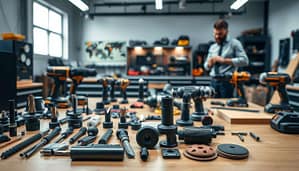
Remember when picking tools was simple? You chose between yellow, red, or orange. Now, our workshops are like a tech startup’s gadget collection.
The market has changed from corded tools to battery-powered wonders. The debate between DeWalt, Milwaukee, and Ryobi is now more complex. Each brand offers something unique.
But, are we seeing real innovation or just fancy packaging? I’ve seen enough on job sites to know the difference. Sometimes, a “revolutionary feature” is just a better battery.
This analysis cuts through the noise. Think of me as your tool-savvy friend. I’m not afraid to point out the emperor’s new power tools.
Top New Tools This Year
The tool industry’s 2023 lineup is like a superhero movie. It has real marvels, some familiar sequels, and a few spinoffs for the money. This year, manufacturers get that pros want new ideas, not just small updates.
Hilti’s DSH 600-22 concrete saw is like Thor – incredibly strong. It can replace 60cc gas saws but costs as much as Asgard. It’s the go-to tool when others fail.
DeWalt’s 60V Max miter saw is like Iron Man. It’s not just hype – it really works. It makes precise cuts and saves energy, like in a sci-fi movie.
Festool’s symmetric miter saw is a German engineering wonder. It’s easy to use, not just for engineers. It makes complex cuts simple for everyone.
Ryobi’s black oxide drill bit set is like Hawkeye. It’s reliable, affordable, and always hits the mark. It’s the unsung hero that gets the job done quietly.
Milwaukee’s M18 Fuel Supersawzall is like the Hulk – strong. Makita’s 40V router is like Black Widow – precise and sleek. DeWalt’s brushless planer is like Captain America – reliable and modern.
The Skil belt/disc sander is like Spider-Man. It’s affordable, versatile, and surprisingly good for its price.
| Tool | Superhero Equivalent | Key Feature | Price Tier |
|---|---|---|---|
| Hilti DSH 600-22 | Thor | Replaces 60cc gas saws | Premium |
| DeWalt 60V Max Miter | Iron Man | Regenerative braking | Professional |
| Festool Symmetric Miter | Doctor Strange | Complex cut accessibility | Premium |
| Ryobi Black Oxide Kit | Hawkeye | Affordable reliability | Consumer |
| Milwaukee M18 Supersawzall | Hulk | Brute cutting power | Professional |
This year’s tools show different approaches from manufacturers. Some focus on power, others on smart tech, and some on making tools easy to use.
Professionals have more innovative tools than ever. These aren’t just updated versions – they’re real advancements that could change how we work.
Feature Deep-Dives
Let’s take a closer look at what makes these new power tools special. The engineering is like a Marvel story, with each company trying to outdo the others. They’re adding unique features to their tools.
Milwaukee’s FORGE battery technology is like a superpower for your drill. It gives you 50% more power and keeps your tool cool. The cells are packed tightly, making them very efficient.
DeWalt’s PowerStack approach is different. They’re arranging cells in new ways to pack more power into less space. It’s like fitting your whole apartment into a small studio.

Bosch’s AmpShare system is a clever idea that’s not yet widely used. It lets you use different brands’ batteries together. But, it’s not as popular as it could be.
Makita’s XGT 40V system is all about high-quality engineering. It’s overbuilt and very powerful, but it’s also expensive. It’s great for pros, but it might be too much for simple tasks.
Even the small improvements are exciting. DeWalt’s regenerative braking saves energy, and brushless motors make tools more efficient. These changes make tools last longer and work better.
| Technology | Brand | Key Advantage | Real-World Impact |
|---|---|---|---|
| FORGE Battery | Milwaukee | 50% more power output | Faster cutting/drilling in tough materials |
| PowerStack | DeWalt | Compact high-density cells | Smaller tools with same power |
| AmpShare System | Bosch | Cross-brand compatibility | Theoretical ecosystem flexibility |
| XGT 40V Platform | Makita | High-voltage performance | Professional-grade power for heavy tasks |
| Regenerative Braking | DeWalt | Energy recovery system | Extended battery life during operation |
These innovations are more than just numbers on a page. They’re changing how we do projects. The right tools can turn anyone into a pro, making hard tasks easier and more rewarding.
Who Should Upgrade?
Upgrading your toolkit isn’t about keeping up with the Joneses. It’s about knowing when your tools are outdated. The real question is, are new tools worth switching to?
For professionals, Milwaukee’s M18 Fuel line is a game-changer. It’s not just better, it’s a huge leap forward. These tools save time and money by lasting longer.
DIY fans should check out Ryobi’s One+ system. It’s like the IKEA of tools – affordable and versatile. The system’s wide range is its best feature.
Homeowners who do simple tasks might not need the latest tools. Kobalt’s 24V system offers great value. It’s perfect for those who want quality without spending too much.
The real question is about battery ecosystems. These systems create loyalty, making it hard to switch. Once you invest, changing brands is tough.
| User Type | Recommended System | Investment Level | Best For |
|---|---|---|---|
| Professional Contractors | Milwaukee M18 Fuel | High ($1,500+) | Daily heavy use and maximum durability |
| Serious DIYers | Ryobi One+ | Medium ($500-$800) | Weekend projects and system versatility |
| Casual Homeowners | Kobalt 24V | Low ($200-$400) | Occasional use and budget-conscious upgrades |
| Ecosystem Switchers | Adapter Systems | Variable | Those wanting new tools without new batteries |
Your upgrade decision should match your tool use. The latest tools are tempting, but buy for what you actually do, not what you dream of doing.
First Impressions
Opening these new power tools was like Christmas for adults who love power tools. The first touch of each tool showed its true character, more than any specs could.
Milwaukee’s Supersawzall cuts through materials with scary efficiency. It makes demolition look like art, like a boxer showing off.
DeWalt’s brushless planer cuts wood with precision, like a spa treatment. Its smooth operation makes you think Swiss watchmakers helped design it.
Festool’s symmetric miter saw is designed for two-handed use. Its balance feels so natural, it’s almost too good to be true.
Some tools, like Bluetooth hammers, make you question their purpose. It seems like some designs come from marketing, not real workshops.
The Kreg 20V lineup shows cordless tech is getting better. They focus on ergonomics, making tools comfortable to hold.
| Tool | First Impression | Real-World Performance | Ergonomics Score |
|---|---|---|---|
| Milwaukee Supersawzall | Brutally efficient | Exceeds expectations | 9/10 |
| DeWalt Brushless Planer | Surgical precision | Buttery smooth operation | 8/10 |
| Festool Symmetric Miter | Intuitively balanced | Game-changing design | 10/10 |
| Bluetooth Hammer | Questionable innovation | Solution without problem | 4/10 |
Testing these tools shows which companies have engineers who use their products. The best tools feel like part of your body, not just gadgets.
Some tools impress with power. Others win with design. The worst ones make you wonder if they were tested before shipping.
First impressions show that specs are important, but how a tool feels in use is key. The best tools combine power and precision, standing out from the rest.
Expert Opinions
Industry insiders are sharing secrets about this year’s tool releases. They say it’s time for brand fans to think twice about their loyalty. The reviews are like a corporate thriller, showing clear winners, surprising weaknesses, and strategic moves.
Milwaukee is not just gaining market share; they’re changing the game. Experts praise their “solutions provider” approach, which tackles real workflow challenges. They’re ahead of the game with integrated systems that professionals use every day.
DeWalt has stopped playing catch-up and is now leading in several areas. Their innovation speed impresses experts, but their product lineup is complex. One analyst called it “a PhD in DeWaltology” to navigate.
Ryobi shows a deep understanding of their DIY audience. Experts might criticize their tools, but Ryobi knows exactly what their customers want. They deliver precisely what their audience needs.
The truth is, some legacy brands are not innovating enough. When your biggest update is a new color, like Makita’s olive green, you might have a problem. The market is moving too fast for these brands.
We’re heading into a time where brands must innovate or risk being left behind. The tool releases show which companies are truly investing in research and development. The smart money is on the innovators, not the ones just changing colors.
Experts agree that the best tool releases this year come from brands that understand their users’ needs. The market rewards real innovation over just making things look new. This trend is here to stay.
Comparison Table
Forget the flashy commercials – the real story of these new power tools is in the data. We’ve crunched the numbers like a hydraulic press on overdrive. We’ve separated engineering excellence from marketing fluff.
Our comparison table below doesn’t just list specs. It tells you which brands actually deliver on their promises. It shows which ones are just polishing their brochures.

| Brand | Performance | Innovation | Value | Verdict |
|---|---|---|---|---|
| Milwaukee | Industry-leading power | Battery tech pioneer | Premium pricing | The valedictorian who charges for notes |
| DeWalt | Consistent output | Smart system integration | Mid-range | The reliable friend who suddenly got interesting |
| Ryobi | Adequate for DIY | Expanding ecosystem | Budget-friendly | The affordable option that keeps getting better |
| Makita | Precision engineering | Ergonomics focus | Professional grade | The engineer who forgets to market |
| Bosch | European refinement | Specialized solutions | Premium | The exchange student with brilliant ideas |
| Festool | Artisan quality | Dust extraction mastery | Luxury | The Porsche of power tools |
| Metabo HPT | Robust durability | Multi-voltage flexibility | Competitive | The dark horse worth watching |
The table reveals fascinating patterns. Milwaukee dominates raw power but makes you pay for it. DeWalt offers the perfect balance for professionals who need reliability with occasional brilliance.
Ryobi continues its Cinderella story. Once dismissed as amateur hour, now consistently delivering competent tools at unbelievable prices. Their expansion into the best cordless power tool brand conversation is nothing short of remarkable.
European brands bring fascinating contrasts. Bosch offers engineering elegance that sometimes gets lost in translation to American job sites. Festool? You’re not just buying tools – you’re acquiring German precision with a side of ego.
The real surprise? How close the mid-tier brands have come to challenging the established royalty. The gap between good and great has never been narrower in the world of new power tools.
User Polls/Comments
Where do you stand in the great tool debate? Recent tool releases have sparked a lot of discussion. It’s clear that people’s loyalties are shifting.
Electricians love Milwaukee fuel, carpenters swear by DeWalt, and weekend warriors show off their Ryobi tools. It seems like each group has its own favorite brand.
But here’s the interesting part: nobody sticks to just one brand anymore. It’s like they’re playing musical chairs with battery platforms. They might use Milwaukee at work but Ryobi at home. This shows that people are more open to mixing brands than ever before.
This new approach to tools means you can choose based on what works best for you. Your toolbox doesn’t care what you use, as long as you get good results.
So, are you loyal to one brand or do you mix and match? Which tool releases have made it into your collection for good?