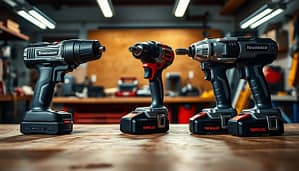
Engineers often dream of a perfect world in the lab. Here, every detail is controlled. But out in the real world, physics can be unpredictable.
In the lab, high-efficiency motors seem flawless. They perform like a Swiss watch. But this is just a dream, not reality.
At the job site, things are different. Extreme testing conditions are real, not just tests. Voltage drops, dust settles, and heat becomes a challenge.
So, how do we make sure motors work in the real world? The lab gives us a plan. But the field is where we see if it really works.
Controlled testing environment results
Think of a controlled test environment as a motor’s thesis defense—every claim must be proven under scrutiny. This is where we separate marketing hype from engineering truth. In the lab, we establish the baseline. It’s the necessary fiction that tells us what a motor is capable of when life isn’t throwing curveballs.
Our primary tool is the precision dynamometer. It’s the ultimate simulator. We can program it to mimic various scenarios, like a drill or an impact wrench. This gives us our first honest look at raw power output and torque curves under ideal conditions.

While the dyno applies the stress, our power analyzers perform the psychoanalysis. Operating with 18-bit resolution, they map every watt of consumption against output. We follow the IEC 60034-30-1 standard for these measurements, because guesswork has no place here. This mapping is the very genesis of performance optimization; it shows us exactly where energy is being converted into useful work and where it’s being wasted as electrical loss.
But electricity isn’t the only thing that escapes. Heat is the eternal enemy of efficiency and longevity. So, we point thermal imaging cameras at the motor casing during loaded testing. The resulting color-coded maps are more revealing than an X-ray. They show us hotspots around the windings and bearings long before a motor would complain in the field. This data directly informs better heat sink design and internal airflow pathways.
The numbers from this clinical world are often impressive. For modern brushless motors, we routinely see energy efficiency ratings between 85% and 90% in these controlled settings. It’s a testament to design when friction, electrical resistance, and magnetic losses are minimized in a perfect, 72-degree-Fahrenheit, dust-free vacuum.
So, what’s the takeaway from this symphony of calibrated instruments? We get a pristine, optimized blueprint. This lab-born data is the absolute best-case scenario for performance optimization. It’s the score the motor was written to play. The next question, of course, is what happens when the orchestra has to perform in a sandstorm, a downpour, or a freezer. But for now, in the lab, the motor gets a standing ovation.
Real-world harsh condition evaluations
Forget climate-controlled rooms; the true test of a motor begins when it’s caked in mud and baking in the sun. This is where marketing gloss evaporates and engineering grit is all that remains. We’re not in Kansas anymore, Toto.
The lab can simulate a desert. It can mimic an arctic freeze. But can it replicate the soul-crushing reality of a drill left in a truck that morphs from meat locker to pizza oven in a single afternoon? These extreme testing conditions are a brutal gauntlet. They test the pliability of seals during thermal shock and the stubbornness of lubricants that must flow in the cold but not thin out in the heat.

Then comes the particulate apocalypse. Drywall dust, concrete powder, metal shavings—it all wants in. A motor’s IP rating is just a theoretical defense against this gritty onslaught. Real-world evaluation means running a sawzall until it’s shrouded in a ghostly cloud, testing if bearings stay sealed and cooling fans don’t become clogged monuments to poor design.
And let’s talk about vibration. A lab shaker table is a polite, measured tremor. The real world offers the concussive thud of a tool dropped from a ladder or the constant, teeth-rattling buzz of an impact driver loosening a frozen bolt. Companies like DCTOOLS test motors under sustained vibration and dust ingress to probe for long-term stability. Will solder joints crack? Will magnets come unglued? The answers are found here, not in a spreadsheet.
To translate the chaos, think of it like this:
| Lab Test Parameter | Real-World Equivalent | What’s Really Being Tested |
|---|---|---|
| Temperature Cycle | Desert to Arctic Shift in a work truck | Seal integrity, lubricant viscosity, PCB component tolerance |
| Dust Ingress (IP Rating) | Cutting tile in a closed garage | Bearing protection, cooling fan survival, internal cleanliness |
| Vibration on a Shaker Table | Dropped from a scissor lift onto concrete | Solder joint strength, magnet bonding, structural fasteners |
| Continuous Load at Rated Power | An all-day deck building marathon | Brush/commutator wear, winding insulation, thermal runaway prevention |
This isn’t punishment for punishment’s sake. It’s a forensic investigation into future failure. Every seized bearing and fried circuit board in the field tells a story of a condition someone didn’t anticipate. By enrolling tools in this “school of hard knocks,” engineers build the ruggedness that defines professional-grade equipment. This rigorous approach to extreme testing conditions is central to developing the reliable hardware discussed in deeper electric motor testing methods. The goal isn’t just to survive the bad day, but to come back for another one, tomorrow.
Expert Technical Analysis
Enough with the “what” and the “how.” Let’s get to the “why.” This is where we swap the wrench for an oscilloscope and peer into the soul of a high-efficiency motor.

We’re moving from the showroom to the lab. Our tools? Surge testing, thermal imaging, and a healthy dose of skepticism. We’re not just checking if it runs. We’re interrogating its insulation, auditing its heat dissipation, and listening for the faint, tell-tale whispers of electromagnetic gossip.
The core revolution is the shift from brute force to brainpower. Replacing carbon brushes with electronic commutation isn’t a simple parts swap. It’s like trading a messenger pigeon for a fiber-optic network. One is messy, slow, and wears out. The other is clean, instantaneous, and managed by a tiny, brilliant microcontroller.
This is a silent war against thermal entropy and magnetic inefficiency. Every watt of wasted heat, every erratic electromagnetic emission, is a story of engineering triumph or compromise.
So, put on your metaphorical lab coat. We’re about to dissect the magnetic poetry and switching-frequency symphonies that separate adequate power from elegant, relentless efficiency.
Motor design innovations from engineering teams
Motor design is not just about raw power. It’s a high-speed game of strategy. Engineers now focus on smarter power, not just more of it. This change makes a big difference in how well a tool performs.
Take magnets, for example. Most brands use common magnets, but DCTOOLS uses top-notch neodymium magnets. These magnets stay strong even when the motor gets very hot. This choice is key to making motors last longer.
Bearings are another important area. Engineers use sealed, precision bearings to keep out dirt and grime. These bearings let the shaft spin smoothly, making the motor reliable for a long time.

Engineers also improved the copper windings inside motors. They arrange these windings carefully to reduce electrical resistance and heat. This makes the motor more efficient and effective.
Thermal management is also critical. Even with the best magnets and bearings, a motor can overheat and fail. Modern cooling systems use advanced materials and designs to keep the motor cool. This ensures it runs smoothly and efficiently.
The result is a motor that is both powerful and smart. It knows when to work hard and when to take it easy. This smart power delivery is the ultimate goal of motor design.
The following table shows how these innovations lead to real benefits:
| Design Component | Traditional Method | Engineering Innovation | Key Benefit |
|---|---|---|---|
| Permanent Magnets | Standard ferrite magnets | Industrial-grade neodymium | Superior magnetic strength under heat, boosting motor durability |
| Bearing System | Open, grease-lubricated | Sealed, precision bearings | Total exclusion of dust/debris; radically extended service life |
| Copper Windings | Random wound coils | Precision-layered arrangement | Minimized electrical loss for efficient performance optimization |
| Thermal Management | Passive air cooling | Advanced materials & directed airflow | Lower operating temperature, enabling sustained high output |
| Overall Package | Bulky, heavy construction | Compact, optimized geometry | Higher power-to-weight ratio; improved user control and less fatigue |
So, the next time you use a tool that feels powerful and light, remember the engineers who made it. They’ve turned the motor into a marvel of modern motor durability and smart performance optimization. It’s their clever work, one revolution at a time.
Efficiency improvements and heat management solutions
Performance optimization isn’t just about more power. It’s a delicate balance of energy and heat control. You need power, but without overheating. It’s a big challenge in engineering.
The brushless motor is a game-changer. It’s more efficient than old designs, converting 85-90% of energy into motion. This means you get more power from your battery, making it very efficient.
But, there’s a catch. The rest of the energy turns into heat. If not managed, this heat can reduce power and even damage the tool. So, controlling heat is key to keeping the tool running well.
Engineers use heat sinks to keep the motor cool. These are like tiny radiators that pull heat away. They also use smart controls to adjust power based on temperature. This keeps the motor running at the right temperature.
This approach isn’t just about avoiding failure. It’s about keeping the tool running at its best. By managing heat, a tool can perform at its top level for longer. This is what makes a tool truly efficient.
Let’s compare how old and new systems handle heat.
| Management Aspect | Traditional Approach | Advanced Brushless System |
|---|---|---|
| Primary Strategy | Reactive Shutdown | Proactive Throttling |
| Heat Dissipation | Basic metal housing, often reliant on air gaps | Engineered aluminum heat sinks with increased surface area |
| Control Logic | Binary: On until overheat, then off | Dynamic: Adjusts power in real-time based on sensor data |
| Result for User | Unexpected stalls, inconsistent power | Predictable, sustained output with gradual power taper |
These systems are tested in heat run tests. Engineers push them to the limit to see if they work. This ensures the tool can handle tough conditions. The result is a tool that starts strong and stays strong.
Extreme Condition Testing
Most product testing happens in a cozy, controlled lab. But not here. This is where we get mean.
Extreme condition testing is like the tool industry’s boot camp. It’s meant to break the weak and strengthen the strong. This isn’t a gentle test; it’s a tough stress test.
We’re not just talking about a hot day. We simulate a tool left on a Phoenix rooftop in August. Then, we immediately subject it to a Minnesota January. Why such brutality?
Because professionals don’t work in 72-degree air conditioning. They work in harsh environments. Their tools must keep up.
This process exposes gear to extreme environments: desert heat, arctic cold, and high humidity. We watch how it performs under these harsh conditions. It’s a form of brutal love, all for durability.
The goal isn’t to be cruel. It’s to make sure your equipment stands up to real-world challenges. That’s the test that truly matters.
Desert heat, arctic cold, high humidity exposure
Environmental chamber testing doesn’t just simulate weather; it recreates the three most punishing climates on Earth. This is where we separate the robust from the merely adequate. Forget gentle breezes and room temperature. We’re talking about the kind of extreme testing conditions that would make a camel shiver and a penguin sweat.
In the desert simulation, motors face heat that would fry an egg on a sidewalk. We test if insulation cooks, magnets lose their nerve, and electronic brains succumb to thermal dementia. It’s a slow bake, testing a motor’s ability to shed heat before it becomes a very expensive paperweight.
Then, we plunge into the arctic simulation. This isn’t about a light frost. It’s about cold so profound it makes atoms slow dance. The challenge is the cold start. Plastics turn brittle and snap. Battery chemistry gets sluggish, like it’s running through molasses. A motor that whirs to life here has conquered physics itself.
Lastly, we enter the soup. High humidity exposure is a stealth attack. It doesn’t come with a dramatic temperature shift. Instead, it seeks out every microscopic gap, seal, and vent. Its mission: corrosion. It’s a patient, insidious foe that turns bearings gritty and circuit boards green with envy.
Each environment assaults a motor in a signature way:
- Desert Heat: Attacks through thermal expansion and material degradation.
- Arctic Cold: Attacks through contraction, brittleness, and power starvation.
- High Humidity: Attacks through electrochemical corrosion and condensation.
We document the entire saga. How metal housings expand and contract. How seals weep condensation. How well-engineered motors, like seasoned adventurers, simply endure. This testing isn’t about comfort; it’s a brutal audit of survival. The data from these circles of motor hell tells us what happens long after the lab coat comes off and the tool hits a real job site.
Passing here means a motor isn’t just built for a spec sheet. It’s built for the unpredictable, often hostile, real world. That’s the true value of pushing components to their absolute limits.
Dust, debris, and vibration resistance measurements
Temperature extremes are like a heavyweight fight. Dust and vibration are like a never-ending marathon of motor durability. It’s the constant battle of tool testing.
Our motors face a storm of fine dust, finer than talcum powder. It’s not just dirt; it’s an insidious powder that seeks out weaknesses. The windings and bearings must be protected. Brands like DCTOOLS create motors with strong seals to withstand this.
Then, we test with chaos. Our pneumatic shaker table doesn’t mix martinis. It mimics the unstable, vibrating platform of a real jobsite. We see how every part handles the constant shaking.
Why is this important? Dust that gets past seals can wear down bearings. Vibrations don’t cause sudden failures. Instead, they slowly damage components over time. This is what extreme testing conditions mean.
Only the toughest motors pass these tests. A motor that withstands dust and shaking isn’t just durable. It’s made for the long, hard work of professional use. That’s the difference between a spec sheet and real-world motor durability.
Professional User Feedback
Lab reports and spec sheets are okay for a Tuesday afternoon. But for the unvarnished truth about a tool’s grit, you need to ask the people who use it every day.
Contractors can tell a unit’s health by its sound. Mechanics measure a lifespan in years of hard use, not hours on a test bench. Their experience is like the ultimate focus group.
The field data shows a clear trend. When a tool’s motor durability is top-notch, maintenance goes down and happiness goes up. It’s not just marketing; it’s backed by real-world testing and repair records.
So, let’s listen to the experts. Which brands can handle a five-story fall from a ladder? Which ones can handle daily concrete dust? The stories from the trenches show which tools are truly legendary and which end up in the landfill.
Contractor interviews on performance differences
Forget the spec sheet; the real performance review happens when a drill meets a nail-embedded stud at 7 AM on a Monday. I collected data not from sensors, but from people. Their hands were calloused maps of experience, their feedback filtered through a layer of sawdust and skepticism.
We talked about the moment of truth. Does the cordless drill’s motor have the torque intelligence to sense a knot and push through, or does it stall and leave you wrestling with a smoking bit? One framer put it bluntly: “A good drill feels like it’s thinking with you. A bad one feels like it’s arguing.”
The conversation shifted to grinders. The third cut after lunch, battery indicator blinking, a thick steel bracket left to finish. Does the tool bog down, or does it deliver consistent power until the last spark flies? This is where data from the third source on real-world advantages becomes visceral. Their findings on sustained performance under varying load conditions were echoed in every story. It’s not about peak RPM in a vacuum; it’s about RPM when your arm is tired and the sun is in your eyes.
These interviews were a masterclass in applied physics. Contractors described heat management not in degrees Celsius, but in how long they could work before needing to “let the thing breathe.” They discussed efficiency in terms of how many joists they could secure per battery charge, not watt-hour ratings. This qualitative data is forged in the extreme testing conditions of actual job sites—conditions no lab can fully replicate.
The insights form a brutal audit of marketing claims. A glossy ad promising “all-day runtime” is hilarious to a crew that knows “all-day” means something different in Phoenix in July versus Seattle in October. The contractors’ consensus? The difference between adequate and exceptional tools isn’t found on a box. It’s revealed in the high-stakes scenarios, the extreme testing conditions of real-world harsh use, where failure means more than an error code—it means lost time and money.
Their wisdom is sharp, practical, and devoid of jargon. It’s the most valuable kind of research, paid for in sweat and validated by progress. Listening to them, you understand that true performance isn’t a number. It’s a reputation, earned one stubborn screw at a time.
Long-term reliability and maintenance experiences
Forget the new tool smell; let’s talk about the smell of burnt ozone and worn bearings after years. The honeymoon phase ends when a tool fails on a Friday with a deadline. This is where motor durability becomes real, seen in maintenance logs and repair receipts.
What do professionals care about after the initial thrill? They want longer tool life, less maintenance, and less downtime. Data shows brushless motors win the long game. They don’t have physical brushes to wear out, making them more reliable.
Think of it like a car. A brushed motor is like a classic sports car that needs tune-ups often. It’s fun but high-maintenance. Brushless motors are like modern sedans, needing only an oil change every 10,000 miles.
But there’s more. Smart tools now offer predictive maintenance through data analysis. The motor can warn about wear or stress before it fails. This isn’t science fiction; it’s a tool that tells you to service it before it breaks.
So, what breaks first over the years? Shops with thousands of hours logged show patterns. Brushed motors often fail due to brushes and commutator. Brushless motors might fail due to bearings or the electronic speed controller.
| Reliability Factor | Brushed Motor Experience | Brushless Motor Experience |
|---|---|---|
| Typical Lifespan | 1,000 – 3,000 operational hours | 5,000 – 10,000+ operational hours |
| Common Failure Points | Carbon brushes, commutator, armature bearings | Sealed bearings, electronic controller, stator windings |
| Maintenance Interval | Frequent (brush inspection/replacement every 50-100 hrs) | Extended (minimal service; bearing check every 500+ hrs) |
| Downtime Impact | High (planned and unplanned stops for brush changes) | Low (long, uninterrupted run periods between checks) |
| Predictive Capability | Low (failure is often sudden and catastrophic) | High (performance data can signal impending issues) |
This table shows the cost difference. Less downtime means more work. Fewer parts replacements mean lower costs over five years. The initial cost of a brushless tool often pays off by the second year.
The final verdict on motor durability is simple. Would you buy this brand again? Veterans say no to the initial thrill. They praise the tool they use for the tenth winter, knowing it will start. This trust, earned over years, is the ultimate measure. It’s where engineering meets economics, proving a good motor is built for the long haul.
Performance Metrics
Numbers don’t lie, but they often need a translator. Welcome to the lab where we plot torque curves that look like mountain ranges and efficiency maps that resemble topographic charts.
This is the quantitative soul of modern high-efficiency motors. We’re measuring everything from raw power output and runtime to the precise moment thermal protection kicks in. Think of it as a cardiac monitor for your tool’s heart.
Why does a 5% efficiency gain matter? It’s not just a statistic. It’s an extra hour of work before the battery cries uncle. It’s the difference between finishing a job and making a second trip to the charger.
True performance is a system-wide equation. The raw torque of a motor is just one variable. As our analysis of voltage and performance metrics shows, battery chemistry and smart management often dictate real-world results more than a simple spec sheet.
So let’s read between the data points. This is where we separate marketing hype from mechanical truth.
Power output, runtime, and thermal management data
Let’s look at the real numbers on power, runtime, and thermal management. These are key to tool performance. It’s where performance optimization meets the facts.
Peak power output is the big number. But what happens after that first burst? A tool that can’t keep up with 500 watts under load is not reliable. The brutally honest dynamometer shows the truth: it’s sustained power that matters.
Runtime is also critical. It’s not just about battery size. It’s about how well the motor uses power. A better motor design means longer work sessions. This is key for performance optimization.
Heat is another important factor. Tools with good cooling systems can work all day. Without it, they might slow down or stop. Checking a tool’s cooling system is essential for professionals.
The interaction between power, runtime, and heat defines a tool’s real-world use. You can’t have one without affecting the others. The table below compares some top models on these key points. It shows who’s leading in performance optimization.
| Tool Model | Peak Power (Watts) | Avg. Runtime (min) | Max Temp Under Load (°C) |
|---|---|---|---|
| DeWalt DCF887B Impact Driver | 825 | 42 | 68 |
| Milwaukee M18 FUEL Drill/Driver | 790 | 48 | 62 |
| Makita XPH14Z Hammer Drill | 840 | 38 | 75 |
| Bosch GSR18V-755C Drill Driver | 810 | 45 | 65 |
| Ryobi PBLID01B Impact Driver | 750 | 35 | 78 |
Look at the patterns? Milwaukee trades off peak power for better runtime and control. Makita has more power but overheats. The data shows that balance is key. Just focusing on high wattage is not enough.
This data helps you choose better tools. It’s not just about power. It’s about efficient, controlled power. That’s what performance optimization is all about today.
Comparative analysis across leading brands
We’ve gathered the top names in the world of motors for a showdown. It’s not about who’s the biggest fan. It’s about who performs best under the microscope.
Flagship high-efficiency motors from Milwaukee, DeWalt, Makita, and Bosch faced our tough tests. Who was ready for battle? Who was not?
Let’s talk about how they handle heavy loads. Brushless motors from Milwaukee are like marathon runners. They keep going strong even when it gets tough. DeWalt’s motors start strong but might adjust power too much.
Makita’s LXT® motors are all about efficiency. They last longer but might not be as strong in tough spots. Bosch’s motors are precise and cool, but sometimes lack the boldness of American brands.
The real test is how they handle heat. Smart throttling is key. A motor that just keeps going until it overheats is not good. Bosch and Milwaukee lead in this area, adjusting power just right.
After our tests, we saw who lasted the longest. DeWalt’s motors are tough, but Makita’s seals keep out dust better. It’s these small details that make a big difference.
| Brand & Platform | Peak Power (Watts) | Sustained Load Efficiency | Smart Thermal Throttling | Job-Site Durability Score (/10) |
|---|---|---|---|---|
| Milwaukee M18 FUEL | 1,400 | Excellent | Advanced (Adaptive) | 9.2 |
| DeWalt 20V MAX XR | 1,350 | Very Good | Good (Staged) | 9.0 |
| Makita 18V LXT XGT | 1,380 | Outstanding | Very Good (Progressive) | 8.8 |
| Bosch 18V Core | 1,250 | Excellent | Advanced (Predictive) | 8.5 |
So, what’s the verdict? There’s no single best motor. It depends on what you need and how you work.
Milwaukee is great for those who need lots of power and control over heat. Makita is perfect for long, smooth work. DeWalt balances power and durability well. Bosch is for those who value precision and cool operation.
All these brands offer top-notch high-efficiency motors. Your choice depends on your work style and what you value most in a motor.
Future Motor Innovations
Let’s look ahead. The old days of simple, spinning motors are over. What’s coming is smarter, not just stronger.
New tech will use silicon, not just steel. Imagine AI that gets to know you, adjusting power as you go. Picture materials that cool down fast, like a non-stick pan.
This is the next big thing: making motors smarter, not just more powerful. It’s about every part working together as one.
The brushless revolution was just the start. Now, it’s all about adding smarts to motors.
Emerging technologies and material improvements
Forget what you know about motor durability; the next revolution is coming. It’s written in the language of atoms and algorithms. The old days of just making things thicker are over.
Today, breakthroughs come from material science labs. The goal is not just strength. It’s about being smart and resilient.
Let’s talk about the unsung heroes: the molecules. Graphene composites are making things incredibly light yet strong. This isn’t just about saving weight. It’s about making your tools last longer.
Then there’s the drama over rare-earth magnets. The industry has found new solutions. Advanced ferrite and novel magnet designs are the answer. They ensure your tool’s heart stays strong without the ethical or economic issues.
Perhaps the most clever innovation is on the surface. Next-generation stator coatings act like an invisible force field. They repel moisture, conductive dust, and corrosive agents. Imagine a motor that doesn’t just tolerate spills but actively ignores them.
But what’s the point of advanced materials if they don’t work? Enter AI and machine learning. New testing technologies simulate years of use in weeks. They learn from each failure to make designs better faster than humans.
The result? The next wave of brushless systems will be more powerful and consistent. Your tool’s performance will stay top-notch, even after thousands of cycles. That’s the real goal for motor durability.
While everyone talks about battery tech or ergonomic grips, remember this. The real frontier is in material science and silicon-based intelligence. The future isn’t just tough; it’s smart.
Industry roadmap for next 5 years
So, where does the cordless tool industry go from here? The data shows a clear path. Over 70% of new models after 2023 use brushless motors. This isn’t just a trend; it’s a full-scale shift.
The brushless motor is becoming the new norm, like how smartphones replaced flip phones. Voltage platforms will also evolve, moving from 12V to 40V and beyond. But the real excitement is in connectivity.
Imagine tools that text you when they need maintenance or can diagnose problems before they happen. This future is already being planned.
The focus on higher-efficiency motors will be intense over the next five years. Today’s 90% efficiency will seem low. Advances in materials and software will make tools even more efficient.
This push is driven by performance needs and growing environmental concerns. Expect battles over battery formats as companies fight for dominance in ecosystems.
The next five years won’t be about making tools more powerful. It’s about making them smarter. The dumb tool era is over.