I’ll be hones early on, I underestimated the importance of hardwood floor acclimation. It seemed like one of those optional steps that slowed down the process. After all, the wood looked dry, ready, and perfectly fine out of the box. But I learned the hard way. Within weeks of installation, gaps started appearing. Some boards shifted. Others began to slightly warp. The problem wasn’t the product it was the process. I had skipped acclimation, and the wood was reacting to its new environment.
That experience changed how I approach every hardwood project. Now, I treat acclimation not as a suggestion, but as a non-negotiable foundation for long-term performance.
What Hardwood Floor Acclimation Actually Means
At its core, hardwood floor acclimation is the process of allowing wood planks to adjust to the temperature and humidity of the environment where they’ll be installed. Wood is a natural material. It absorbs and releases moisture depending on the surrounding air. When the moisture content inside the wood doesn’t match the room, the boards will expand or contract after installation.
That movement is what causes:
- Gaps between boards
- Buckling or cupping
- Uneven surfaces
Acclimation ensures that the wood reaches a state of equilibrium moisture content, meaning it’s stable enough to be installed without significant post-installation movement.
Why Skipping Acclimation Leads to Costly Problems
From what I’ve seen across multiple projects, skipping acclimation almost always leads to issues and those issues aren’t minor.
When hardwood is installed too soon:
- Dry wood absorbs moisture → expands and pushes against itself
- Moist wood dries out → shrinks and creates gaps
Either way, the result is a floor that looks and performs poorly. What makes this worse is that these problems often appear after the installation is complete, when fixing them becomes expensive and time-consuming. In many cases, the only real solution is removal and reinstallation something no homeowner or contractor wants to deal with.
How Long Should Hardwood Acclimate?
One of the most common questions I get is: How long is enough?
The general guideline is:
3 to 7 days minimum
However, that timeframe can vary depending on several factors:
- Climate (humid vs dry regions)
- Season (summer vs winter)
- Type of hardwood (solid vs engineered)
- Indoor conditions
Recommended Acclimation Time
| Condition | Recommended Time |
|---|---|
| Controlled indoor climate | 3–5 days |
| High humidity environment | 5–7+ days |
| Wide plank hardwood | 7+ days |
| Engineered wood | 2–3 days |
From my experience, it’s always better to give it more time than less. Rushing this step rarely ends well.
Matching the Room Environment Is the Real Goal
Acclimation isn’t just about waiting it’s about matching conditions.
The room where the flooring will be installed should already have:
- Stable temperature (typically 60–80°F)
- Controlled humidity (around 35–55%)
This is critical because the wood needs to adapt to real living conditions, not temporary ones. If you acclimate wood in an unfinished or uncontrolled space, you’re essentially preparing it for the wrong environment.
How I Properly Acclimate Hardwood Flooring
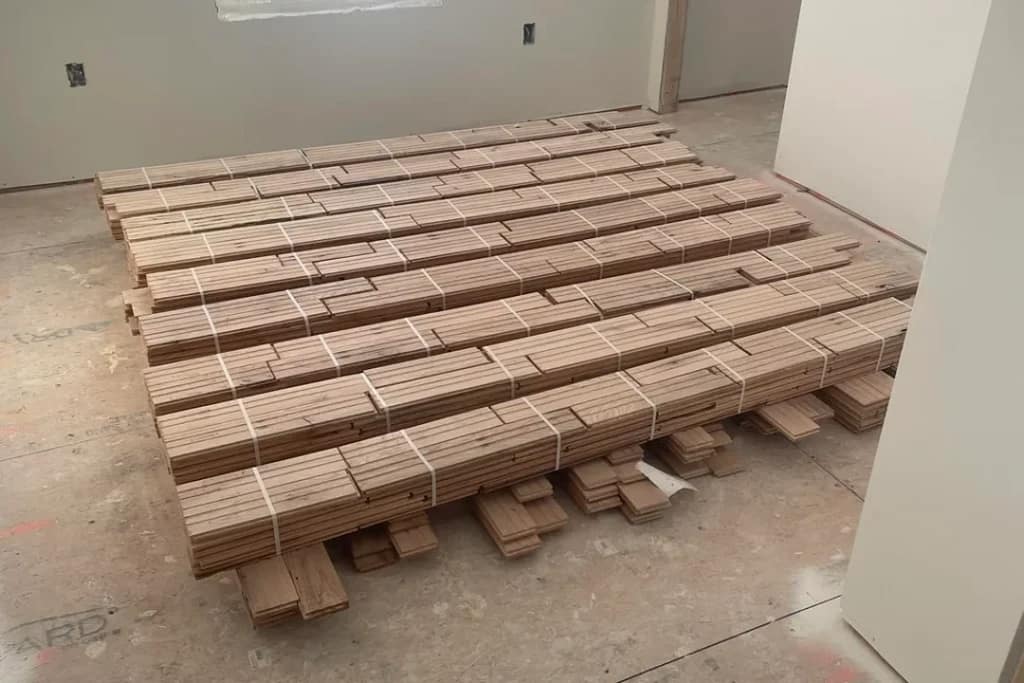
Over time, I’ve developed a simple but effective approach to hardwood floor acclimation. First, I bring the wood into the actual installation space. Then I open the packaging or at least loosen it to allow airflow. I stack the boards in a way that promotes circulation never tightly packed.
I also make sure:
- HVAC systems are running
- Windows and doors are closed
- Moisture sources are controlled
This creates a consistent environment where the wood can gradually adjust. It’s not complicated but it requires patience.
Why Moisture Control Is the Bigger Picture
Acclimation is really about one thing: moisture balance. Wood doesn’t just react during installation it continues to respond to environmental changes throughout its life. That’s why maintaining consistent humidity after installation is just as important. According to guidance from National Wood Flooring Association, proper hardwood floor acclimation is essential to prevent movement-related issues and ensure long-term stability.
From my perspective, this highlights an important truth: Acclimation isn’t a one-time step it’s part of a larger moisture management strategy.
Common Mistakes I See People Make
Even when people attempt acclimation, there are a few mistakes that can still cause problems.
The most common ones include:
- Leaving wood in unopened boxes
- Acclimating in a garage instead of indoors
- Ignoring humidity levels
- Rushing the process due to timelines
Each of these undermines the entire purpose of acclimation. What I’ve learned is that success comes from attention to detail, not just following basic instructions.
The Long-Term Impact on Your Floor
When done correctly, hardwood floor acclimation sets the stage for a floor that:
- Stays stable over time
- Maintains tight seams
- Resists warping and movement
It’s one of those invisible steps that you don’t notice when it’s done right but you definitely notice when it’s done wrong. In many ways, it determines whether your flooring will last years or decades.
The Step That Defines Everything
Looking back, skipping acclimation was one of the most expensive lessons I’ve learned in flooring. Now, I see it differently. Hardwood floor acclimation is not a delay it’s protection. It’s the step that ensures your investment performs the way it should, without surprises later. If there’s one takeaway I’d emphasize, it’s this: You don’t install hardwood flooring you prepare it first.
Because when the wood is ready, everything else falls into place.