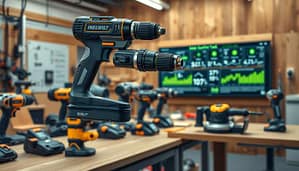
Welcome to the tech world’s version of the Met Gala. Here, charging cables replace red carpets, and silicon is the new celebrity. The recent industry gatherings have unveiled innovations that make last year’s tech look like ancient history.
ESR’s thermal-management wizardry in their Qi2.2 chargers makes competitors look like they’re using campfire technology. Primeview’s massive 163-inch display could make IMAX engineers question their career choices.
Google’s Gemini 2.5 Pro gives your smartphone a PhD in artificial intelligence. These aren’t just product launches; they’re cultural moments wrapped in circuit boards.
We’re here with the analytical precision of a watchmaker and the wit of a late-night host. Our mission? To separate the truly revolutionary from the merely evolutionary in these spectacular trade show highlights.
Prepare for a journey through the most jaw-dropping releases that are reshaping our technological landscape. This is where innovation meets entertainment, and we’ve got front-row seats.
What’s hot & why
Ever wonder why some tech products get more attention than a free espresso bar at a tech conference? It’s not just about specs—it’s about solving real human problems with style. Let’s break down why these three innovations are dominating conversations.
ESR’s CryoBoost® cooling technology isn’t just another wireless charger. It’s the first solution that actually makes physics work for us instead of against us. Wireless charging has always suffered from the basic problem: energy transfer creates heat, and heat kills efficiency. CryoBoost® tackles this like a thermodynamic superhero, keeping your devices cool while they power up.
The real magic happened during the live demos where we saw phones charging at full speed without turning into pocket warmers. This isn’t incremental improvement—it’s the fundamental breakthrough wireless charging needed.
Then there’s Primeview’s Pixel Clear Transparent LED. Most display tech asks “how can we make better screens?” Primeview asked “how can we make screens disappear?” Their transparent LED walls represent that rare moment when technology becomes architecture.
During the hands-on sessions, we witnessed how these panels transform spaces without dominating them. Storefronts become dynamic art pieces. Office buildings gain interactive facades. Homes get smart windows that are actually smart. It’s display technology that understands sometimes the best design is invisible design.
Google’s Veo 3 video generation tool might be the most democratizing tech in years. The live demos showed something remarkable: professional-quality video creation without a film crew, expensive equipment, or years of training.
What makes Veo 3 special isn’t just its technical prowess—it’s the cultural shift it enables. Suddenly, small businesses can create compelling ads. Educators can produce engaging content. Artists can visualize concepts without budget constraints. It’s not about replacing filmmakers; it’s about empowering storytellers.
These three innovations share a common thread: they solve actual human frustrations. They’re not technology for technology’s sake—they’re technology that makes our lives better, simpler, and more interesting. And that’s why they’re generating buzz that’s more substantial than just marketing hype.
Demo Highlights
Remember Tony Stark manipulating holograms in Iron Man? That’s what product demos feel like now, minus the fictional budget.
ESR’s Stash Stand cases transform from protection to presentation with mechanical precision. Primeview’s displays respond with the sensitivity of a concert pianist’s fingers.
Google’s Gemini Live doesn’t just answer questions—it understands context like your smartest friend. These aren’t just specs on paper. They’re experiences in hand.
Want to create this kind of magic? Check out our demo video creator for bringing your products to life.
This is where technology stops being concepts and becomes pure, undeniable wonder.
Video notes, key takeaways
In today’s world, product videos are key. They show us what’s real, not just marketing tricks. Let’s take a closer look at what companies really want to share.
ESR’s videos are refreshingly honest. They compare their products to others using real data, not fancy graphics. This shows their gear is truly better, not just claimed to be.
Primeview’s videos are all about solving real problems. They show the messy parts, like dealing with cables and finding studs. It’s a rare look at how things really work, not just how they look.
Google’s presentations are full of hidden messages. Watch how they handle devices during demos. It’s not just about what they say, but how they do it. Their comfort with the product speaks volumes.
What makes a product video stand out? It’s not just about what they show:
| Brand | What They Show | What They Hide | Reality Score |
|---|---|---|---|
| ESR | Actual temperature comparisons | Long-term durability tests | 8/10 |
| Primeview | Real installation challenges | Custom wiring requirements | 9/10 |
| Natural device handling | Beta software glitches | 7/10 |
Great tech demos know we’re skeptical. We’ve seen too many products fail to live up to their promises. These companies build trust by being open and honest.
When watching product videos, be a film critic. Look at what’s in focus and what’s not. Pay attention to how presenters handle devices. The truth is often hidden in plain sight.
Industry Buzz
Welcome to the digital water cooler. Here, we share the real talks, not just the polished press releases.
Are charging standards bodies really on board with ESR’s Qi2.2? What do AV integrators say about Primeview’s energy claims when no one’s listening?

And how are developers using Google’s new AI coding tools? You might be surprised by the answers.
This isn’t just another event recap. It’s a peek behind the scenes. You’ll see the real thoughts, not just the corporate lines.
So, grab your virtual popcorn. The real show begins when the cameras stop.
What the pros said
When the architects of our digital future speak, I listen like a Cold War spy analyzing diplomatic cables. The real story isn’t in their words—it’s in the strategic silences between them.
ESR CEO Tim Wu unveiled his “Tech Made Easier” philosophy with the conviction of a late-night infomercial host. But does the product lineup actually deliver on this promise? His vision suggests simplicity, yet their new multi-device docking station requires a engineering degree to operate. The gap between corporate messaging and reality has never been wider.
Primeview’s Shay Giuili promised to “meet every moment” with their diverse product range. Translation: we’ll throw everything at the wall and see what sticks. Their booth displayed more variations than a Baskin-Robbins flavor list—from minimalist monitors to gaming behemoths. The strategy? Cover all bases and hope something resonates.
Google’s executives framed their AI advancements as “democratization, not domination.” A noble sentiment, until you realize they’re democratizing their own ecosystem. It’s like saying McDonald’s is democratizing cuisine by opening more locations.
| Executive | Company | Key Message | Reality Check |
|---|---|---|---|
| Tim Wu | ESR | Tech Made Easier | Complex docking solutions |
| Shay Giuili | Primeview | Meet Every Moment | Product overload strategy |
| Google Team | AI Democratization | Ecosystem expansion |
These executive statements reveal more about market anxiety than innovation. When companies promise everything to everyone, they’re often unsure who they’re actually serving. The real trade show highlights emerge not from what’s said, but from what these carefully crafted messages try to conceal.
Future Tech Preview
Welcome to the crystal ball section, where we look at tomorrow’s tech. Remember, most predictions seem as silly as shoulder pads in an 80s yearbook.
ESR’s growing ecosystem shows a future where devices work together smoothly. It’s not just about being compatible—it’s about seamless integration that makes sense.
Primeview’s transparent displays suggest a future where tech fits into our lives naturally. Imagine windows that also act as displays—making the “smart home” idea more practical.
Google’s Android XR platform might bring us augmented reality that’s not just for show. The real challenge is in live demos that show real-world uses, not just Pokémon hunting.
We’re linking today’s tech to tomorrow’s dreams, but with a healthy dose of skepticism. We don’t want to get too excited before it’s proven.
Roadmaps/shared standards
In the tech world, the most exciting announcements often get all the attention. But let’s be real—the most important ones are usually the boring ones. Why? Because standards and roadmaps are the invisible architecture that makes innovation possible.
Think of it like city planning. Nobody gets excited about sewer systems or electrical grids, but try living without them. That’s what we’re talking about here—the unsexy infrastructure that makes everything else work.
Let’s look at some key players making waves with their commitment to interoperability:
- ESR’s Qi2 compatibility – Your charger won’t become obsolete next year
- Primeview’s interoperability commitment – Their displays actually work with existing systems
- Google’s ecosystem integration – Their AI tools work across devices seamlessly
These companies understand something fundamental: revolutionary technology isn’t about building the coolest standalone gadget. It’s about creating something that plays well with others.
Remember that kid who brought a game nobody else could play? That’s what happens when companies ignore standards. They create amazing technology that becomes digital islands—impressive but ultimately useless because they can’t connect to anything else.
The real magic happens when innovation meets compatibility. When your new wireless charger works with next year’s phone. When your display connects to both old and new systems. When your AI assistant doesn’t care what device you’re using.
This isn’t just technical jargon—it’s about making technology work for you, not the other way around. The best new releases aren’t just flashy gadgets; they’re pieces that fit into your existing digital life seamlessly.
So the next time you see a “boring” standards announcement, pay attention. That’s where the real revolution is happening—in the background, making sure everything works together. Because in tech, as in life, the most revolutionary things are often the ones that play well with others.
Hands-On Photos
Welcome to the digital art gallery where every pixel tells a story. Or, hides one.

ESR’s product photography shows sleek silhouettes. But they never compare thickness. That’s no accident. It’s visual storytelling at its most strategic.
Primeview’s installation shots promise seamless integration. Yet they carefully crop out cable chaos. Google’s demo visuals highlight intuitive interfaces while minimizing complexity.
This isn’t just product photography. It’s corporate poetry where every angle serves a narrative. The real magic happens in what they choose not to show you.
Let’s analyze these tech images like art critics at MoMA. Because in today’s market, the most honest product feature might be the one intentionally left out of frame.
Gallery with captions
If the tech event was a symphony, these product ecosystems were the movements that made the whole thing sing. Forget standalone gadgets—the real magic happened when you saw how these companies built entire technological universes. Our visual event recap reveals how the best innovations aren’t single notes but complete compositions.
ESR’s display felt like walking into a tech-savvy tailor’s shop. Their three-piece suit approach to accessories—charging, protection, and productivity—actually makes sense when you see it laid out together. The wireless charger that talks to the tablet stand that coordinates with the laptop sleeve? It’s like a boy band where every member actually contributes something useful.
Their magnetic ecosystem impressed us a lot. Phone mounts that snap into car vents, desk stands that connect to power banks, and cases that work with both—it’s the kind of interoperability we wish our smart home devices had. No more dongle drama or adapter anxiety.
Primeview’s display gallery offered something we rarely see: scale context. Their massive outdoor installations stood beside intimate touch screens, creating a visual spectrum that answered every “what if?” question about digital displays.
The contrast between their 120-inch outdoor LED wall and their 8-inch portable touch screen was striking. Same color calibration, same interface philosophy, different applications entirely. It’s like seeing a parade float and a sports car from the same manufacturer—both impressive, just for different parades.
Google’s AI interface screenshots told a story of seamless integration. Their demo showed the same AI assistant moving from search to document creation to spreadsheet analysis without missing a beat. It’s the technological equivalent of a triple threat—sings, dances, and acts.
The visual flow between their productivity tools felt significant. When your email AI suggests calendar items that sync with document recommendations that connect to spreadsheet templates, you’re not using apps anymore—you’re conducting an orchestra.
This event recap ultimately reveals a shifting paradigm. The most compelling tech innovations aren’t about standalone products but interconnected systems that create experiences greater than the sum of their parts. It’s the difference between buying a single instrument and joining a orchestra—both make music, but one definitely sounds richer.
Buy or Wait?
So you’ve seen the dazzling trade show highlights and now your credit card is sweating. We get it. That new tech looks sexy as hell on the convention floor.
But let’s get real. Does that shiny gadget actually deserve a spot in your life right now? Or is it just hype with a fancy logo?
We’re cutting through the marketing fluff. ESR’s new charging ecosystem looks cool, but should you wait for version 2.0? Primeview’s display is gorgeous, but is it stable enough for actual work?
And Google’s AI tools? They’re powerful, but are they ready for prime time or just in their awkward beta phase?
We’re giving you the brutally honest truth. Because the coolest tech isn’t always the smartest purchase. Let’s separate the must-haves from the maybe-laters.
Availability & pricing
Let’s talk about money. It’s a big deal, even if it’s not always the first thing we think about. Technology can be amazing, but if it costs too much, it’s hard to get excited about it.
ESR’s prices are like the Tesla Model 3 – they’re high enough to show quality but not so high that they’re out of reach. It’s like a fancy cocktail bar that doesn’t make you feel bad for asking questions.
Primeview is in a different league. Their prices are for big businesses, not home users. It’s like buying a custom-made suit versus something off the rack. Both cover you, but one makes a statement.
Google is playing a game of its own. Their subscription models are new and interesting, but they might also make things harder to get. It’s like a digital version of the old razor-and-blades model.
Here’s what the pricing landscape actually looks like:
| Brand | Entry Point | Premium Tier | Value Proposition |
|---|---|---|---|
| ESR | $299 | $899 | Prosumer accessibility |
| Primeview | $1,200 | $3,500 | Enterprise reliability |
| Free* | $15/month | Ecosystem integration |
*With subscription requirements for full functionality
The real question is, what are you actually buying? ESR offers soul in their hardware, Primeview gives you reliability, and Google offers an evolving experience. Their live demos show you’re not just testing features, but whole philosophies.
Remember, in tech, you get what you pay for. But smart shoppers know they might not need everything. Sometimes, the cheaper option is just as good.
Final Word
Tech trade shows used to be all about the latest gadgets. But this year was different. Now, screens are becoming part of our surroundings.
Take Primeview’s transparent displays, for example. They’re not just tech. They’re changing how we design buildings. Google’s AI is more than a smart helper. It’s a partner in our daily lives. These aren’t just new products. They’re hints at our future.
ESR shows us a shift towards integrated solutions. We’re moving from separate products to connected systems. This change is more than just tech. It’s a sign of a bigger shift towards unity.
So, what does this mean for you? Your next tech buy is a vote for the future. You’re deciding between a closed system or an open one. The choice is yours. But the path is clear. The future is about connection, intelligence, and smoothness. Are you ready for it?