Every sanding decision leaves evidence, even when the surface looks clean under shop lights. Palm Sander Vs Orbital Sander has become a more urgent question because furniture refinishers, flooring crews, and serious DIY woodworkers are under new pressure to work faster without sacrificing finish quality, dust control, or long-term trust in the result.
Palm Sander Vs Orbital Sander Is A Finish Strategy Decision
I have never thought of sanding as the dull middle step between cutting wood and applying finish. Sanding is where a project either becomes convincing or starts revealing every shortcut. The tool in your hand affects scratch pattern, speed, edge control, dust collection, abrasive cost, and the amount of handwork required before the final coat.
That is why Palm Sander Vs Orbital Sander is not a simple brand comparison or a question of which tool is “better.” It is a decision about purpose. A palm sander, often called a quarter-sheet sander, is compact, square or rectangular, and suited to controlled finish work. A random orbital sander uses a round disc and a motion that blends rotation with orbiting action, making it faster and usually cleaner on open surfaces.
The difference matters because wood finishing has become less forgiving. Hardwax oils, water-based coatings, dark stains, and low-sheen finishes can expose scratch marks that once disappeared under heavier film finishes. A tool that removes material quickly can also create risk if it is handled carelessly. A gentler tool can protect detail but waste time on heavy stock removal. The professional choice sits somewhere between speed and restraint.
What Each Tool Actually Does
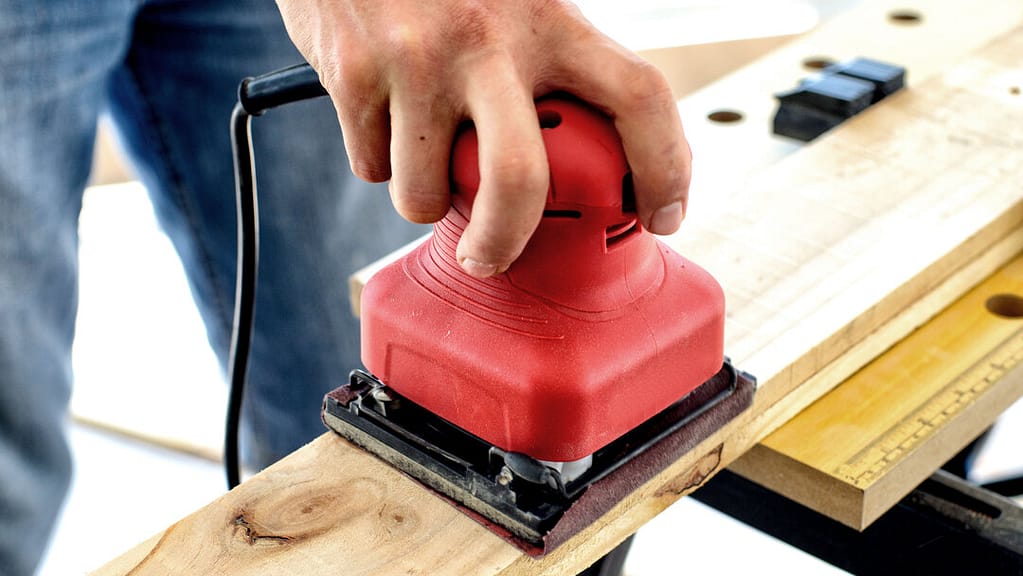
A palm sander is a small finishing sander designed to use part of a standard sandpaper sheet. Its practical advantage is geometry. The flat, squared pad reaches into corners, along inside edges, and against profiles that a circular pad cannot enter. It is light, inexpensive to feed with abrasives, and easy to control on small furniture parts.
Its weakness is efficiency. A palm sander is not built to strip heavy finish, flatten rough boards, or correct aggressive milling marks. It vibrates in a small pattern, which can leave visible scratches if the grit is too coarse or the user presses too hard. The tool rewards patience more than force.
An orbital sander, in common workshop language, usually means a random orbital sander. It uses round hook-and-loop discs and a motion designed to reduce obvious swirl marks while removing material faster than a palm sander. It is the default tool for tabletops, cabinet panels, doors, stair parts, and many refinishing tasks where broad surfaces need consistent preparation.
The trade-off is shape. A round pad cannot square up an inside corner. It also requires attention near edges, where tilting the tool can create dish marks. The random orbital sander offers momentum, but it asks for steadier technique.
Where Palm Sanders Still Earn Their Place
The palm sander survives because the workshop still has corners. Drawers, cabinet frames, chair parts, stair returns, trim assemblies, and built-in details all create spaces where a round disc is clumsy. When I am working close to a finished edge or cleaning up a small repair, a palm sander often gives me better control.
It also makes economic sense for occasional users. Sheet sandpaper is easy to buy, easy to cut, and often cheaper than specialty discs. For a homeowner smoothing a repaired door frame or preparing a small painted shelf, that cost difference can matter. A palm sander is rarely glamorous, but it is practical value.
The tool is strongest when the work is light: smoothing between grits, easing a small patch, cleaning up corners, or preparing a surface that is already close to finished. It is not the machine I reach for when the surface is rough, coated, uneven, or large. Used within its lane, however, it delivers useful precision.
The mistake is expecting a palm sander to act like a production tool. Pressing harder does not make it a better sander. It usually creates heat, loads the paper, and deepens scratches. The right use is relaxed pressure, fresh abrasive, and a steady pace.

Why Random Orbital Sanders Changed Expectations
The random orbital sander became the modern standard because it solved a real workshop problem: speed without the obvious scratch signature of older orbital tools. The combination of spinning and orbiting motion helps interrupt repetitive marks, especially when the user moves through grits properly.
That does not mean the tool is foolproof. Swirl marks still happen. They come from contaminated abrasive, skipped grit progressions, excessive pressure, poor dust extraction, or moving too fast across the surface. The sander reduces visible marks, but it does not eliminate the need for discipline.
For anyone making the Palm Sander Vs Orbital Sander decision, a useful starting point is this external comparison of Palm Sander Vs Orbital Sander, which frames the practical contrast in the way many buyers first encounter it. The deeper professional question is not only which one sands faster, but which one produces the most reliable surface for the finish you plan to apply.
Random orbital sanders are especially persuasive on tabletops, wide boards, cabinet doors, workbench tops, stair treads, and refinishing jobs. They reduce labor, improve consistency, and pair well with dust extraction. In those settings, the tool creates efficiency that is hard to ignore.
The Finish Quality Trade-Off
Finish quality is where tool selection becomes visible. A surface may feel smooth to the hand but still contain scratch patterns that appear under stain or angled light. Dark pigment can settle into sanding marks. Clear finishes can magnify uneven sheen. Film coatings can make defects look trapped under glass.
A palm sander can leave a more linear or vibrating scratch pattern, particularly with aggressive grit. That is why I rarely treat it as the main tool for large exposed surfaces. It is better as a detail sander or a final helper in tight areas. The user must keep the pad flat and let the abrasive cut without forcing the machine.
A random orbital sander usually creates a more forgiving scratch pattern, but it can produce pigtails or circular marks when the abrasive is worn, clogged, or contaminated. One grain of debris under the pad can mark an entire panel. The lesson is simple: the finish is only as good as the cleanliness of the process.
Grit progression matters more than many users admit. Jumping from coarse paper directly to fine paper does not erase deep scratches; it polishes around them. A controlled sequence gives each grit a clear job. In professional work, sanding is not random movement. It is a managed path toward consistency.
Dust Control Has Become A Bigger Part Of The Decision
Dust is no longer an afterthought. It affects visibility, abrasive life, finish adhesion, tool performance, and worker health. It also changes the choice between these two tools because random orbital sanders generally pair more effectively with modern dust collection systems.
A palm sander may include a small bag or port, but its paper often needs punched holes, and collection can be uneven. A random orbital sander with a perforated pad and connected extractor usually manages dust more effectively. That is one reason I often recommend it for larger jobs, especially indoors.
The dust issue deserves special attention with wood species, old coatings, painted surfaces, and enclosed work areas. Sanding creates fine particles that remain airborne and settle into finish work. Better extraction improves safety, but it also improves the final surface because dust is less likely to clog abrasive or contaminate a coating.
For anyone working in shops or job sites where airborne particles are part of the daily environment, resources on random orbital hand sanders are worth understanding as part of tool selection, not merely as a safety sidebar. A sander should be judged by how it handles waste as well as how it cuts wood.
Choosing The Right Sander By Project Type
The cleanest way to choose is to start with the surface, not the tool. Ask whether the job is broad or confined, rough or nearly finished, flat or detailed, visible or hidden. The answer usually points in the right direction.
| Project Type | Better Starting Choice | Why It Usually Fits |
|---|---|---|
| Large tabletop | Random orbital sander | Faster coverage and more even scratch blending |
| Inside cabinet corner | Palm sander | Square pad reaches where round discs cannot |
| Painted furniture stripping | Random orbital sander | Better removal speed on open surfaces |
| Light touch-up sanding | Palm sander | Gentle control on small repaired areas |
| Stair tread refinishing | Random orbital sander | Efficient on flat, exposed wear surfaces |
| Trim and tight edges | Palm sander | Better access near profiles and corners |
| General woodworking shop use | Random orbital sander | Broader range and stronger dust compatibility |
This table does not replace judgment. It reflects how I think through choice on real projects. A serious shop often benefits from both tools because they solve different problems. The mistake is buying one and pretending it should do everything.
Technique Matters More Than Tool Loyalty
Tool loyalty can become a trap. Some people defend palm sanders because they learned on them. Others treat random orbital sanders as the answer to every surface. Both positions miss the point.
Technique determines the finish. Keep the pad flat. Let the abrasive do the work. Move at a controlled pace. Do not bear down to compensate for dull paper. Vacuum between grits. Inspect under angled light. These habits matter more than marketing claims.
Pressure is one of the biggest errors I see. More pressure does not automatically mean more sanding. It can slow the pad, overheat the surface, damage the abrasive, and create uneven marks. The hand should guide the tool, not punish the wood. That restraint is judgment.
The same principle applies to grit progression. Coarse grits shape and remove. Medium grits refine. Fine grits prepare for finish. Skipping steps creates hidden problems that appear later. Good sanding is quiet accountability: every pass leaves a record.
What Is Changing In The Workshop
The tool conversation is shifting because finish expectations are rising. More woodworkers are using low-sheen coatings that do not hide poor prep. More homeowners are refinishing rather than replacing. More contractors are working in occupied homes where dust, noise, and turnaround time shape customer satisfaction.
Battery technology has also changed expectations. Cordless sanders are more capable than they used to be, though runtime and dust collection still matter. Pneumatic tools remain important in professional environments where air systems support long sanding sessions and lighter handpieces. For readers evaluating broader finish workflows, the discussion around finish quality in woodworking and floor refinishing adds useful market context without treating one handheld tool as the whole story.
The broader trend is toward systems, not isolated tools. Abrasive quality, extraction, lighting, surface inspection, tool balance, and finish chemistry all interact. The sander is important, but it is part of a chain. Weak links create failure even when the machine itself is good.
This shift favors users who think like finishers rather than tool collectors. The better question is not “Which sander is best?” It is “Which sanding system gives this surface the best chance to accept the finish cleanly?” That mindset creates clarity.
The Practical Decision Framework I Use
When I decide between these tools, I start with five questions. How large is the surface? How much material must be removed? How visible is the final finish? Are there corners or details the pad must reach? How much dust can the workspace tolerate?
If the surface is large, flat, and exposed, I usually reach for a random orbital sander. It gives me speed, dust compatibility, and a better chance of blending scratch marks. If the surface is small, boxed in, or close to a corner, I reach for a palm sander or use it after the random orbital has done the main work.
For most buyers who can only purchase one tool, I usually lean toward a random orbital sander. It covers more situations and handles more demanding prep. The exception is the user whose work is mostly small repairs, inside corners, light finishing, or budget-conscious occasional sanding. In that case, the palm sander remains a sensible priority.
The smartest answer for serious woodworking is both. Use the random orbital sander for the field. Use the palm sander for corners and controlled finish touch-ups. Finish by inspecting the surface, not by assuming the tool made the right decision for you.
Why The Better Choice Depends On The Standard You Set
The Palm Sander Vs Orbital Sander debate becomes easier when the standard is clear. If the goal is a quick utility surface, either tool may work. If the goal is a refined tabletop, cabinetry panel, or visible floor component, tool choice becomes more consequential.
A weak sander with poor pad control can create marks that cost more time than the tool saved. Too much tool can flatten details, round edges, and remove character from older furniture. Cheap paper can clog, tear, shed grit, and cut inconsistently. The abrasive is not a disposable afterthought; it is the cutting edge.
The strongest woodworkers I know are not sentimental about tools. They are loyal to outcomes. They choose based on evidence: the surface, the dust, the scratch pattern, the finish schedule, and the time available. That is a more mature way to work.
Final Perspective For Better Sanding Decisions
The choice between these sanders is really a choice about standards. A palm sander offers access, affordability, and fine control in tight spaces. A random orbital sander offers speed, versatility, and stronger performance on broad surfaces. Neither tool excuses poor technique, skipped grits, or careless dust management.
This matters now because finish quality has become a visible measure of craftsmanship. Buyers notice smoother furniture, cleaner refinished floors, and surfaces that accept coatings without swirl marks or blotchy scratches. The opportunity is to treat sanding as a strategic stage, not a chore.
My practical view is straightforward: start with the surface, define the finish standard, then choose the tool that supports that outcome with the least compromise. Palm Sander Vs Orbital Sander is not a contest with one permanent winner. It is a working decision, and the best results come from matching the tool to the job with confidence, restraint, and a clear eye for the finished surface.