A flooring job can look flawless from across the room and still fail under closer inspection. Right now, as material costs remain stubbornly high and customers expect cleaner, faster, longer-lasting installations, the margin for error has never been thinner.
I have seen plenty of flooring projects judged by color, pattern, or finish, but the true standard of craftsmanship often reveals itself at the cut line. Edges, seams, transitions, and fit determine whether a floor feels professionally installed or visibly compromised. That is why investing in the right cutting technique is no longer a minor trade preference. It is a business decision, a quality-control measure, and, in many cases, the difference between profit and waste.
Precision Is Where Flooring Quality Begins
In flooring, cutting is not just a preparatory step. It is the moment where planning, material knowledge, and tool control come together. A poor cut does more than look rough. It can weaken a seam, create visible gaps, increase waste, slow the job, and leave the installer fighting small imperfections for the remainder of the project.
The industry often talks about layout, subfloor prep, and moisture management, all of which matter enormously. But even on a well-prepared floor, weak cutting practices can undermine the final result. Clean edges help planks lock properly, tiles sit more evenly, and transitions meet with sharper visual consistency. When cuts are accurate from the start, the rest of the installation tends to move more efficiently, with fewer adjustments and fewer compromised pieces.
That has become especially important as homeowners and commercial clients alike scrutinize finishes more closely. Social media, high-resolution listing photos, and design-driven renovation trends have changed expectations. What once passed as acceptable now stands out immediately.
Matching The Tool To The Cut
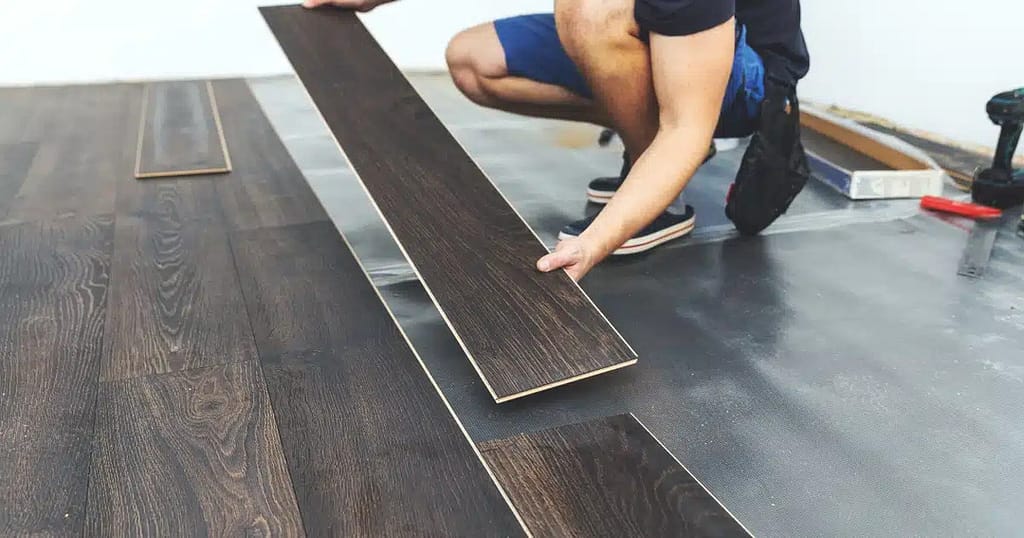
The most reliable installers do not reach for one saw and force it into every task. They match the tool to the material and to the type of cut required. That sounds obvious, but it is often where efficiency and workmanship begin to separate.
For rip cuts, a table saw remains one of the most valuable tools in flooring work. Long, straight cuts demand consistency, and a table saw delivers clean edges that are difficult to replicate with improvised methods. When installers attempt rip cuts with the wrong tool, the result is usually visible at the wall line or in the final row, where roughness and drift become harder to hide.
Crosscuts require a different kind of control. A miter saw is built for fast, accurate trimming across the width of a board, producing the crisp ends needed for tight-fitting plank and hardwood installations. On repetitive jobs, that precision also saves time. Instead of correcting slightly off-square cuts later, the installer starts with dependable repeatability.
Tile is its own category entirely. Hard, brittle, and unforgiving, it exposes cutting mistakes immediately. A wet saw is not a luxury in tile work; it is essential. Water helps cool the blade, reduce dust, and limit chipping along the cut edge. Without it, installers risk ruining material that often carries a higher price tag and a shorter tolerance for visible defects.
Blade Direction Is A Small Detail With Big Consequences
Some of the most costly mistakes in flooring come from details that look minor on paper. Blade direction is one of them. Whether material should be cut face-up or face-down depends on how the blade enters and exits the surface. Ignore that, and even a sharp blade can leave splintering, tear-out, or chipped finishes.
This is where technical knowledge becomes practical value. The finish surface must be protected, not just the structure of the material. A cut that is dimensionally correct but cosmetically damaged is still a bad cut. Flooring is both functional and visual, and the visible side of the material always carries the burden of judgment.
Understanding blade behavior also improves consistency across different products. Engineered wood, laminate, luxury vinyl plank, and tile all respond differently under friction and pressure. The installer who understands not just how to cut, but how the blade interacts with each surface, gains a clear advantage in both quality and speed.
For anyone looking to sharpen safe cutting habits as well as technical discipline, the right cutting technique deserves the same level of attention as any other installation standard.
Cleaner Cuts Mean Lower Waste And Better Margins
There is a financial argument here that deserves more attention. Clean cuts do not simply improve appearance; they protect margins. Flooring materials are expensive enough that every damaged plank or chipped tile matters. On larger jobs, repeated cutting errors can quietly erode profitability faster than many contractors realize.
Waste compounds in several ways. There is the obvious cost of ruined material, but there is also lost labor time, interrupted workflow, and the cumulative frustration of remeasuring and recutting. Small inefficiencies add up over the life of a project. By contrast, a cleaner cut usually means a piece fits the first time, seams pull tighter, and the crew can move forward without constant correction.
That has a direct effect on customer confidence as well. Clients may not always identify the specific reason a floor looks better, but they notice when seams are tight, edges are crisp, and transitions appear intentional. Precision reads as professionalism. In a competitive market, that perception is commercially valuable.
Why Technique Matters More As Materials Evolve
Modern flooring products are marketed for ease of installation, but that can create false confidence. Click-lock systems, prefinished planks, and thinner-profile materials may reduce some labor, yet they often demand more finesse at the cutting stage, not less. Factory finishes are more prone to visible edge damage. Narrow tolerances leave less room for correcting mistakes. Decorative surfaces make flaws stand out faster.
In other words, easier installation does not mean looser standards. If anything, newer products punish bad technique more quickly because they are designed to fit tightly and display cleanly. Precision has become more visible, not less.
That is why experienced installers continue to treat cutting as a core skill rather than a routine step. The tool matters, the blade matters, and the orientation of the material matters. The cumulative effect of those choices is what gives a floor its professional finish.
The Real Value Of Getting It Right
The best flooring work often looks effortless, but it is built on disciplined decisions. The right saw for the right cut, the correct blade approach for the material, and the patience to prioritize accuracy over improvisation all shape the final outcome. Clean cuts create tighter seams, reduce waste, and elevate the entire installation.
This matters right now because the economics and expectations of flooring have both changed. Materials cost more, customers notice more, and visible mistakes travel faster than ever in a portfolio-driven industry. In that environment, cutting technique is not a secondary concern. It is one of the clearest markers of whether a flooring professional is merely finishing the job or truly mastering it.