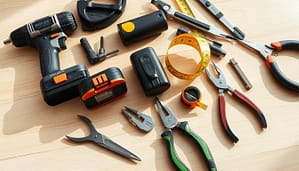
Pull up a virtual bar stool. Let’s talk to the people who’ve been in the trenches.
I’ve been listening to contractors and lead technicians. They tested the latest smart power tools for half a year. Forget the glossy brochures. We’re here for the gritty post-mortem.
Did these intelligent assistants live up to the hype? Or did they become very expensive, very complicated paperweights? Their candid takes reveal a lot about modern tool monitoring systems.
Platforms like aiventic promise step-by-step repair guidance, acting as a “second brain.” But in the field, does it feel more like a nagging backseat driver? The data is telling.
Recent studies show this tech is transforming technician work. Training that once took months now collapses into weeks. Even more compelling? A solid 75% of mobile workers report these systems save them significant time.
So, what’s the real-world learning curve? And what unexpected benefits emerged after the six-month mark? Let’s dive into the analysis.
Leading contractors share 6-month AI tool trial results
Forget tentative pilot programs; the six-month mark for AI diagnostics in the field has delivered a verdict so clear it’s impossible to ignore. The results aren’t just good—they’re the kind of data that makes old-school project managers do a double-take. We’re talking about a fundamental rewrite of the daily grind.
A major heavy equipment dealer with over 2,000 workers found a game-changer in AI-powered pre-work briefings. Instead of technicians spending the first hour figuring out what was wrong, the system told them before they left the yard. Onboarding time for new service calls plummeted. The tool didn’t just diagnose the machine; it pre-diagnosed the entire job.
The numbers from these trials are where the story gets concrete. According to industry data, platforms built around predictive maintenance slashed unplanned equipment downtime by 25-30%. That’s a quarter of your “fire drill” emergencies simply erased. Companies also logged significant time savings on every single service call. This isn’t about working faster; it’s about working smarter from the moment the ticket is created.

The real triumph, echoed by every contractor we spoke to, was philosophical. They moved from a reactive, “firefighting” posture to one of calm, proactive control. The magic wasn’t in flashy robots, but in the quiet, relentless hum of IoT sensors feeding data to algorithms that never sleep. This shift is becoming central to broader construction fleet management trends, stressing foresight over frantic reaction.
So, what did they actually avoid? Let’s break down the “oh-crap” moments that never happened:
- Critical component failures on excavators during peak digging season.
- Unexpected compressor breakdowns that would have halted an entire crew.
- Diagnostic guesswork that previously turned a two-hour job into a six-hour saga.
- The cascading schedule delays that follow any major unplanned repair.
In short, the data from those first 180 days didn’t just suggest improvements. It rewrote the maintenance playbook. The focus is no longer on who can fix something the fastest, but on who can ensure it never breaks at the wrong time. That’s the power of a true predictive maintenance strategy.
Tool manufacturer R&D insights on diagnostic algorithms
Forget the old image of engineers tweaking gears. Today, tool R&D is more like a Silicon Valley data center. It’s filled with servers training neural networks. The goal is to create a tool’s central nervous system.
I got the inside scoop. The shift is from writing fault codes to training digital bloodhounds. These new diagnostic algorithms don’t just scream “error.” They listen. They can tell the difference between a heavy load and a motor bearing about to fail.

Think of it as teaching a drill to diagnose its own ailments. Is that vibration just normal wear, or is it a sign of a bigger problem? The difference is billions of data points. Machine learning algorithms are learning these subtle signatures from millions of hours of real-world data.
This demands a new level of rigor. We can look to healthcare for an analogy. The FDA’s clearance of AI like IDx-DR for diabetic retinopathy wasn’t granted lightly. It required massive clinical validation. Tool brands are now facing a similar question: what does “clinical validation” look like for a cordless impact wrench? It means proving, beyond statistical doubt, that their algorithm’s prediction of a brush failure in 50 hours is correct, not just a clever guess.
The development process mirrors AI in other fields, like generative design. As noted in autonomous systems research, solutions aren’t designed once. They iterate. A diagnostic algorithm might start by recognizing obvious failures. Through constant retraining with new data, it evolves to predict them earlier and with finer granularity. It’s a living, learning system.
| Diagnostic Era | Core Technology | What It Detects | Action Trigger |
|---|---|---|---|
| Reactive | Basic sensors & fault codes | Complete failure or major error | “Tool is down.” |
| Predictive (Current R&D Focus) | Machine learning algorithms on vibration, sound, thermal data | Specific component wear patterns and pre-failure signatures | “Bearing X will fail in ~2 weeks.” |
| Prescriptive (Emerging) | Advanced neural networks with cross-fleet learning | Systemic inefficiencies and optimal maintenance schedules | “Schedule service for Thurs. afternoon; also, adjust grip pressure to extend clutch life.” |
The insight from the R&D labs is clear. The next competitive edge isn’t stamped from steel. It’s coded, trained, and validated. The tools that know themselves are the ones that won’t leave you hanging.
Field Test Data
Let’s swap campfire stories for spreadsheets. We’ve heard the promises. Now, we need the proof.
What does a 25-30% cut in maintenance costs actually mean for a project’s bottom line? How does a system that cuts unplanned breakdowns by up to 75% change a worksite’s rhythm? This is where predictive maintenance turns into real money.

The numbers are impressive, but the real story is in the metrics that matter. Think of MTBF stretching like a rubber band. Catastrophic tool failures becoming rare. Most importantly, imagine the daily win: technicians building instead of fixing.
This data-driven shift turns equipment care into a strategic asset. Consider that advanced predictive safety platforms have shown field-test data with unplanned downtime reduced by over 44%. That’s not just an improvement. It’s a transformation.
This is the hard evidence. Tool monitoring is no longer a luxury. It’s a financial must.
Performance metrics: downtime reduction, maintenance cost savings
Performance metrics in tool management are about avoiding disasters, not just fixing them. It’s like financial detective work for quiet success. The real savings come from avoiding big failures, not just fixing small ones.
Downtime reduction is key. We’re not just talking about quick fixes. We’re talking about preventing big problems during important tasks. This means a smooth workflow instead of a big mess.
IoT sensors in smart power tools are the heroes here. They watch over everything, alerting you to problems before they start. They catch issues like a hot motor or a weak battery before you even notice.

The cost savings are clear. You save money on repairs, labor, and shipping. Your maintenance budget becomes proactive, not just reactive.
The indirect savings are even bigger. You avoid penalties and keep your team happy. This turns data into a valuable tool for your business.
So, what do these numbers look like? Predictive maintenance data shows big savings:
| Maintenance Approach | Avg. Annual Downtime per Tool | Avg. Annual Maintenance Cost | Project Delay Risk |
|---|---|---|---|
| Reactive (Fix-on-Failure) | 48 hours | $850 | High |
| Preventive (Scheduled) | 24 hours | $600 | Medium |
| Predictive (IoT-Driven) | 8 hours | $300 | Low |
The table shows big gains. You save 40 hours of work and hundreds of dollars per tool. The risk column shows how much safer you are.
The best metric is the one you don’t see. It’s the data from IoT sensors that tells you everything is okay. This silence is worth a lot of money. The disasters you avoided are your new advantage.
Predictive vs reactive maintenance comparison charts
The debate between maintenance methods is more than just tools and oil. It’s a financial battle with data as the judge. Let’s look at the numbers.
For years, people have used two bad methods. The first is fixing things only when they break. It’s like ignoring a warning light until it’s too late. The second is scheduled maintenance, which changes parts based on time, not need. It’s like getting a haircut every two weeks, whether you need it or not.
Now, there’s a new approach: predictive maintenance. It uses AI to be precise and cost-effective. The chart below shows the big differences. It proves a new way to manage your tools.
| Maintenance Approach | Cost Reduction | Downtime Impact | Equipment Lifespan |
|---|---|---|---|
| Reactive (Run-to-Failure) | Negative (Cost Increase) | Severe & Unplanned | Shortened by 30-40% |
| Traditional Scheduled | Low to Moderate (10-15%) | Planned, but Often Unnecessary | Moderately Extended |
| Predictive (AI-Based) | High (25-35%) | Minimal & Planned | Extended by 20-25% |
Look at the cost column. Reactive maintenance is a financial loss. You pay for new parts, rush shipping, and lost time. Scheduled maintenance is better, but you’re wasting money on good parts.
Now, see the predictive maintenance row. The high cost savings isn’t magic. It’s math. You replace only what’s needed, exactly when it’s needed. You turn big failures into small breaks.
The downtime impact is key. Big, unplanned outages cost a lot. They mess up schedules and hurt client trust. AI maintenance makes downtime planned, not chaotic. You get control.
Equipment lifespan is also important. Wearing out tools is expensive. Predictive maintenance extends tool life by understanding wear patterns. It’s like a retirement plan for your tools.
This isn’t just a small change. It’s a big shift in how you use resources. The most expensive tool is the one you don’t understand. AI helps understand, giving you a big edge.
Forget guessing. Start predicting. Your bottom line will thank you.
Real-World Applications
Enough theory. Let’s talk about grease, concrete dust, and Monday mornings. Where does this digital intelligence actually matter? We’re moving from the clean dashboard to the dirty job site. Here, tool monitoring stops being a buzzword and starts saving backs, budgets, and deadlines.
In construction, it’s not about a single drill. Companies like Built Robotics deploy an AI co-pilot for entire excavators. Their Exosystem turns a massive machine into a precise, data-collecting partner. It’s autonomy where you need it most.
For electricians, the game is compliance and calibration. Imagine a smart power tools kit that logs torque settings and usage. It creates an irrefutable digital record for inspectors. No more guesswork, just proof.
Plumbers face the mystery of the hidden leak. Now, pair a thermal imaging camera with smart software. The system can distinguish between harmless condensation and a costly, wall-soaking breach. This isn’t just a fancy gadget; it’s a problem-solver.
From autonomous diggers to guided repairs, this tech connects the digital twin to the physical twist of a wrench. On today’s site, tool monitoring is becoming as essential as your hard hat.
Case studies from construction, electrical, plumbing sectors
Let’s dive into real-world examples where AI is making a big difference. It’s not just a buzzword; it’s a tool that helps in many ways. Companies are seeing real benefits from using AI to improve their work.
A national construction firm had a big problem. They needed to check the 15-story building’s exterior for any damage. The old way took weeks, with workers on scaffolding.
They used AI drones with high-resolution cameras. These drones were guided by machine learning algorithms to spot problems. They scanned every inch of the building.
The drones found tiny cracks and damage that humans couldn’t see. They finished the job in just 72 hours. This used to be a long and risky task, but now it’s quick and safe.
Next, let’s look at electrical work. A contractor was doing wiring in hospitals. If a tool broke, it could cause big delays.
They solved this by adding IoT sensors to their tools. These sensors watched for unusual vibrations and temperature changes. The data went to the cloud, where machine learning algorithms checked if everything was okay.
During a hospital project, the system noticed some tools were about to fail. They replaced them before any damage happened. The IoT sensors helped avoid a big problem.
Our last example is from plumbing. A big plumbing company had trouble with boiler repairs. Sending experienced techs to every job was not efficient, and junior techs often needed to come back.
They used an AI platform to help with repairs. It was like having a veteran plumber in your tablet. It used augmented reality and a big database to guide techs. It learned from many past repairs.
This made first-time fix rates go up by over 20%. Training new techs was much faster. The AI helped every technician work better and faster.
| Sector | Core Problem | AI & Smart Tool Solution | Key Business Result |
|---|---|---|---|
| Construction | Slow, dangerous manual building inspection. | Drives with cameras & machine learning algorithms for visual analysis. | 15-story inspection completed in 72 hours vs. weeks. |
| Electrical | Unpredictable tool failure during critical installations. | IoT sensors in tools for predictive maintenance based on vibration data. | Prevented failures on sensitive hospital job, avoiding costly downtime. |
| Plumbing | High callback rates and long training cycles for complex repairs. | AI diagnostic platform with AR guidance to augment technician skill. | First-time fix rate increased by 20+%; training time reduced drastically. |
What do these examples show? AI is being used in many ways to solve real problems. In construction, it’s the big inspector. For electricians, it’s the tool that predicts problems. For plumbers, it’s the teacher. AI is making tools smarter and helping in many ways every day.
ROI analysis for professional tool fleets
Let’s talk about real money: what’s the return on investment when you upgrade your tool fleet with predictive maintenance? It’s not just about buying new tools. It’s a big change in how you manage your assets. It’s like turning your spending into a way to make money.
The time it takes to see the benefits of smart tools is real. You compare the costs to the savings. The costs are clear: monthly software and one-time sensor hardware. But the savings are where the real benefits are.
The savings include less downtime, longer tool life, and lower training costs. A tool that warns you of a problem means your team doesn’t get stuck. Industry data shows a 20-30% drop in repair times and a 15-25% increase in fixing things right the first time.
This means more work for your team and happier clients. You also save on travel. Data shows a 20% cut in travel time. Your team fixes problems faster, more often.
Let’s look at a simple example. We’ll compare a mid-sized fleet over a year. It has 50 tools, a mix of power and diagnostic equipment.
| Metric | Traditional Reactive Fleet | Fleet with Predictive Maintenance | Impact |
|---|---|---|---|
| Annual Tool Repair & Replacement Cost | $18,500 | $13,500 | 27% reduction |
| Tool Replacement Rate (Annual) | 12% | 8% | 33% improvement |
| Average Repair Time (per incident) | 3.5 hours | 2.5 hours | 29% faster |
| First-Time Fix Rate | 68% | 82% | 21% increase |
| Travel Time per Job | 1.2 hours | 0.96 hours | 20% savings |
See the difference? The cost of predictive maintenance technology is quickly outweighed by savings. For most, the payback period is 6 to 12 months. After that, it’s all profit.
Here’s something to think about: 80% of top companies in the trades use AI tools. This isn’t just for tech fans. It’s the new standard for success.
In a field where profits are slim, predictive maintenance is a game-changer. It’s not just an IT expense. It’s a way to stay ahead. The question is, can you afford to be left behind?
Technology Deep Dive
So, how does a chunk of metal and plastic seem to know what’s coming? Let’s explore the engine of modern insight without getting lost in jargon.
It begins with a network of IoT sensors. These tiny sensors are always talking. They share info on temperature, vibration, torque, and sound, creating a constant flow of data.
This data needs a brain. That’s where machine learning algorithms come in. They don’t just look for big problems. They learn what’s normal and spot small changes that hint at trouble.
It’s like hearing one wrong note and knowing the whole orchestra is off-key. This tech, from predictive maintenance in excavation to advanced pattern recognition in healthcare, turns noise into insight.
How sensors detect wear patterns, vibration signatures
The secret to predicting a tool’s failure isn’t magic—it’s physics. IoT sensors turn this into data. It’s like giving tools a nervous system and a voice. Tool monitoring platforms listen to them all day.
Vibration is key. An accelerometer doesn’t just feel “shaking.” It maps a unique vibration signature. This signature is like a fingerprint for mechanical health.
A high-frequency buzz might mean a loose internal component. A rhythmic thump could indicate imbalance. The early, subtle grind of a failing bearing has its own distinct digital scream.
Data from predictive maintenance platforms shows these IoT sensors are shockingly precise. They can tell the difference between normal vibration and signs of failure, often weeks in advance. It’s like hearing noise versus understanding language.
Then there’s heat. A thermal sensor tracks not just “temperature,” but heat patterns. A motor should warm up evenly. A localized hot spot on the housing is a glaring red flag—it points to friction where none should exist.
This is the tool silently telling you it’s working too hard, that a seal is failing, or that lubrication has broken down.
Pressure and acoustic emission sensors add more layers to the story. But the concept extends beyond feeling and hearing. Advanced systems are now using visual recognition. Imagine a camera-equipped system that can literally see wear on a drill bit or corrosion on a connector.
It’s the logical next step: if a sensor can feel a bearing’s cry, why can’t one see a gear’s fatigue?
This is the unglamorous poetry of modern maintenance. IoT sensors act as relentless translators, converting the analog groans and fevers of machinery into a clean, actionable digital narrative. The goal isn’t to replace the seasoned mechanic’s ear. It’s to bottle that expertise and put it inside every tool in the fleet, creating a continuous, intelligent tool monitoring dialogue that never clocks out.
Machine learning models for failure prediction
Forget crystal balls; the real magic in predicting tool failure lies in machine learning algorithms that learn from history. Sensors provide the raw vocabulary—temperature spikes, vibration hums, power draws. But the machine learning model is the author writing the prophecy.
This isn’t about simple “if-then” rules your grandpa might have used. We’re talking about models that ingest thousands of examples. They study tools that failed and all the sensor data that led up to the event. The goal? To find the hidden correlations a human would never spot.
Maybe it’s a specific combo. A slight temperature rise paired with a subtle change in a vibration harmonic. This duo might always precede a brush failure by exactly 48 hours. The model learns this pattern. Then, it watches for it in real-time data streams. It’s a crystal ball powered by probability and petabytes.
This concept is proven. In healthcare, AI models diagnose diseases more accurately as they process more patient scans. The same principle applies here. A predictive maintenance platform gets smarter with every tool it monitors. It constantly refines its predictions.
So, what kinds of algorithms are doing this heavy lifting? They’re not all the same. Different models have different strengths for different failure scenarios.
| Algorithm Type | How It Learns | Best For Predicting | Real-World Analog |
|---|---|---|---|
| Regression Models | Finds mathematical relationships between sensor values and time-to-failure. | Gradual wear (e.g., bearing degradation, battery life). | Predicting a car’s engine lifespan based on oil temperature and RPM history. |
| Decision Trees & Random Forests | Asks a series of yes/no questions about sensor data to classify tool health. | Catastrophic failures with clear warning signs (e.g., motor overload, blade cracks). | A flow chart diagnosing why a computer crashed, based on error codes and system logs. |
| Neural Networks | Discovers incredibly complex, non-linear patterns across massive datasets. | Subtle, multi-sensor failures (e.g., harmonic imbalances in drills, thermal runaway in batteries). | Facial recognition software that identifies a person from millions of pixel patterns. |
The beauty is in the learning loop. Each new data point from your tool fleet makes the model slightly wiser. It’s a core technology that turns guesswork into a calculated forecast. You move from a state of reactive panic to one of proactive calm.
Source data from predictive maintenance platforms shows these models can forecast failures with startling accuracy. They don’t just see the problem coming. They tell you when and often why. This is the brain behind the operation. The sensors report. The machine learning algorithms decide.
Ultimately, this is how you build a smarter toolbox. You’re not just collecting data. You’re hiring a silicon-clad sage to interpret it. The result is true predictive maintenance, where you fix things just before they break, not just after.
Future Outlook
So, where is this whole digital transformation headed? If today’s tech feels like a helpful assistant, the future looks more like a symbiotic mind-meld between worker, machine, and project.
Forget about isolated gadgets. We’re building integrated ecosystems. Consider that 37% of mobile workers already use AR on the job. That’s not just for cool visuals; it’s the first step toward a live, data-fed overlay of the entire worksite.
The real magic happens when smart power tools start talking—not just to you, but to each other and the materials they’re handling. This is powered by a dense network of IoT sensors, moving us from scheduled check-ups to true predictive maintenance.
Forward-looking concepts like the digital twin—a virtual replica of a physical asset—and generative design will blur the line between tool, operator, and plan. The result? A single, fluid, and highly optimized workflow.
Industry adoption timeline predictions
Predictive maintenance is now a real tool, changing how we work. Is it just a trend or a new standard? Let’s look at the adoption curve. Already, 90% of leaders are investing in AI for maintenance. Also, 75% of mobile technicians are saving hours each week.
We’ve moved past the early stages and are speeding up. I predict that predictive maintenance capabilities will soon be a must-have in fleet purchases. It will be as essential as Bluetooth and brushless motors.
What’s pushing this forward? Labor shortages and tight margins. You can’t find enough skilled workers, so tools must work smarter. You’re also under pressure to cut costs, and predictive maintenance helps with that.
Companies that wait will face big challenges. Imagine competing with a rival who spends 15-20% less. That’s the gap delay creates. The question has shifted from “why try it?” to “how can we afford not to?”
The market is growing fast. Analysts say the field service management sector will hit $17.3 billion by 2030. It’s no longer a niche; it’s the main event. The adoption curve is steep, and early adopters are already ahead.
In three years, not having predictive maintenance will seem old-fashioned. The real question is, will you lead or follow?
Next-generation diagnostic features in development
The R&D labs have finished their current demo. Now, they’re planning the next big thing on whiteboards. The magic happens when diagnostics move from screens to our eyes.
Augmented Reality is the next big thing. Imagine a technician using a tablet on a noisy drill. The tablet shows a red circle around the problem area. It also gives step-by-step repair tips, all in real-time.
This isn’t just a dream. It’s using AI to help fix problems. Every repair becomes a guided lesson.
The goal is more than just fixing things. It’s about making them better. Imagine tools like DeWalt or Milwaukee sharing data. This data helps create better tools for the future.
These tools learn from lots of use. They suggest improvements for the next version. It’s like having a team of experts working together.
This idea comes from advanced tech like Proprio’s surgical AI. It’s changing how we see tools. Instead of just fixing them, they help improve themselves.